 ChipApex | Global Electronic Components Supplier
SEARCH
Search Product
Search Post
— IC芯片 | 连接器 | 传感器 | 被动器件 —
Search productSearch post
— IC芯片 | 连接器 | 传感器 | 被动器件 —
Consult the customer manager about the wholesale price.
consultation hotline:86-132-6715-2157
email:[email protected]
Contact the product manager for consultation. One-stop consultation is available.
Do you want a lower wholesale price? Please send us your inquiry and we will reply immediately.
The AD1937WBSTZ-RL is a high-performance, single-chip audio codec featuring four differential analog-to-digital converters (ADCs) and eight differential digital-to-analog converters (DACs). It utilizes a multibit sigma-delta architecture with a 24-bit resolution and supports sample rates from 8 kHz to 192 kHz. The device operates on a single 3.3 V supply and includes an integrated phase-locked loop (PLL) for clock generation. Key performance metrics include a dynamic range of 107 dB for ADCs and 112 dB for DACs, with a total harmonic distortion plus noise (THD+N) of -96 dB. It features an I²C control port and is housed in a 64-lead LQFP package.
Verify the specific ordering suffix RL indicates reel packaging when sourcing components. Confirm that the device meets AEC-Q100 automotive qualification requirements if intended for vehicle applications. Ensure the design accommodates the 64-lead LQFP footprint and thermal characteristics specified in the datasheet outline dimensions.
Select this component for designs requiring high channel counts with differential signaling to minimize noise. The integrated PLL simplifies clock distribution by eliminating the need for separate high-frequency oscillators. Verify compatibility with the host microcontroller's I²C interface and ensure the system power supply aligns with the 3.3 V operating voltage specifications.
The AD1937 belongs to the Analog Devices AD193X family of high-performance audio codecs. This family shares common architectural features such as the multibit sigma-delta conversion technology and low EMI design principles. Variants within the series may differ in pin count, output configuration (single-ended vs. differential), or specific feature sets like the number of channels.
The AD1939 is a documented similar part within the same product family offering comparable codec functionality.
The device features an on-chip PLL that can derive the master clock from the LR (frame) clock or an external crystal, eliminating the need for a separate high-frequency master clock source.
The PD/RST pin resets all control registers to their default settings. It is active low and should be pulled low by an external resistor to guarantee proper startup behavior.
Yes, the device supports a standalone mode where register settings are configured at reset using the serial control pins (ADDR0, SDA, SCL, ADDR1) without requiring active I²C communication.
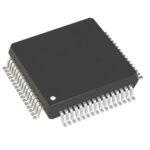 AD1937WBSTZ-RL
The activity of extra discounts on wholesale prices is in full swing…
Please fill in your contact information and we will send you the latest wholesale price list.





