 ChipApex | Global Electronic Components Supplier
SEARCH
Search Product
Search Post
— IC芯片 | 连接器 | 传感器 | 被动器件 —
Search productSearch post
— IC芯片 | 连接器 | 传感器 | 被动器件 —
Consult the customer manager about the wholesale price.
consultation hotline:86-132-6715-2157
email:[email protected]
Contact the product manager for consultation. One-stop consultation is available.
Do you want a lower wholesale price? Please send us your inquiry and we will reply immediately.
The AD1941YSTZ is a 28-bit SigmaDSP audio processor from Analog Devices, housed in a 48-lead LQFP package. It features a hardware-accelerated DSP core with a 28-bit × 28-bit multiplier and full 56-bit accumulator for double-precision processing. The device supports sample rates up to 192 kHz and includes 21 kB of data memory for audio delay. It operates on a single 2.5 V supply, utilizing an on-chip voltage regulator for compatibility with 3.3 V or 5 V systems. The AD1941 distinguishes itself from the AD1940 by using a 2-wire I²C control interface instead of SPI.
Verify the I²C control interface requirement, as this distinguishes the AD1941 from the SPI-controlled AD1940. Confirm that the design utilizes the 48-lead LQFP package dimensions and accounts for the specific power supply configuration involving the internal regulator and external PNP transistor drive via the VDRIVE pin.
Select the AD1941 when an I²C bus is preferred for control over SPI. Ensure the application requires up to 16 channels of audio processing and supports the 2.5 V core voltage. Verify that the host controller can manage the I²C timing constraints, including the 400 kHz SCL frequency limit and required pull-up resistors on the SDA and SCL lines.
The AD1941 is part of the AD1940/AD1941 family of SigmaDSP processors. While functionally identical to the AD1940 regarding signal processing capabilities, memory architecture, and I/O ports, it differs exclusively in its control interface. The AD1941 uses a 2-wire I²C bus, whereas the AD1940 uses a 4-wire SPI port. This allows designers to choose based on existing system bus architectures without changing the audio processing logic.
The AD1940 is a direct functional substitute if the system design accommodates the SPI interface instead of I²C. Pin compatibility exists for most audio and power pins, but the control pins (CDATA/CCLK/CLATCH/COUT vs. SDA/SCL) are not interchangeable without schematic modification.
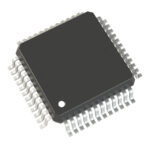 AD1941YSTZ
The activity of extra discounts on wholesale prices is in full swing…
Please fill in your contact information and we will send you the latest wholesale price list.





