 ChipApex | Global Electronic Components Supplier
SEARCH
Search Product
Search Post
— IC芯片 | 连接器 | 传感器 | 被动器件 —
Search productSearch post
— IC芯片 | 连接器 | 传感器 | 被动器件 —
Consult the customer manager about the wholesale price.
consultation hotline:86-132-6715-2157
email:[email protected]
Contact the product manager for consultation. One-stop consultation is available.
Do you want a lower wholesale price? Please send us your inquiry and we will reply immediately.
The AD1974WBSTZ is a high-performance, single-chip analog-to-digital converter (ADC) featuring four differential inputs utilizing a multibit sigma-delta architecture. It operates on a single 3.3 V supply and supports sample rates from 8 kHz to 192 kHz with 24-bit resolution. Key electrical specifications include a dynamic range of 107 dB and total harmonic distortion plus noise (THD+N) of -94 dB. The device integrates an on-chip phase-locked loop (PLL) for clock generation, reducing electromagnetic interference (EMI). It offers flexible digital interfaces including I2S, left/right justified, and TDM modes, housed in a 48-lead LQFP package.
Verify the specific suffix 'W' indicates automotive qualification status as per the manufacturer's ordering guide. Confirm that the LQFP package dimensions match the target PCB footprint requirements. Ensure power supply decoupling capacitors are placed close to AVDD and DVDD pins to maintain signal integrity and meet EMI specifications.
Select this component when a low-power, high-resolution ADC with integrated clocking is required. The on-chip PLL eliminates the need for external high-frequency oscillators, simplifying board layout. Verify that the system can accommodate the 3.3 V logic levels and that the SPI control interface is available for configuration. Consider thermal resistance characteristics if operating at maximum sample rates.
The AD1974 is part of Analog Devices' audio data converter portfolio, designed specifically for multi-channel audio processing. It serves as a direct replacement for legacy stereo ADCs in systems requiring expansion to quadraphonic or surround sound channels without increasing component count significantly.
Publicly confirmed substitute part numbers are not provided in the source documentation. Cross-referencing should be performed based on pin compatibility and electrical specifications such as dynamic range and supply voltage.
The master clock can be generated by the on-chip PLL using the LRCLK or an external crystal, or it can be provided directly via the MCLKI pin.
The differential inputs have a nominal common-mode voltage of 1.5 V, which can be biased using the CM pin.
Yes, standalone mode is available by grounding CIN, CCLK, and CLATCH, configuring the device with default settings and I2S format.
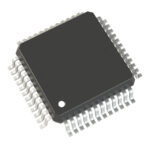 AD1974WBSTZ
The activity of extra discounts on wholesale prices is in full swing…
Please fill in your contact information and we will send you the latest wholesale price list.





