 ChipApex | Global Electronic Components Supplier
SEARCH
Search Product
Search Post
— IC芯片 | 连接器 | 传感器 | 被动器件 —
Search productSearch post
— IC芯片 | 连接器 | 传感器 | 被动器件 —
Consult the customer manager about the wholesale price.
consultation hotline:86-132-6715-2157
email:[email protected]
Contact the product manager for consultation. One-stop consultation is available.
Do you want a lower wholesale price? Please send us your inquiry and we will reply immediately.
The AD1974YSTZ-RL is a high-performance, single-chip analog-to-digital converter (ADC) featuring four differential sigma-delta converters. It operates on a single 3.3 V supply and supports sample rates from 8 kHz to 192 kHz with 24-bit resolution. The device achieves a dynamic range of 107 dB and includes an integrated phase-locked loop (PLL) for clock generation. It offers flexible digital audio interfaces including I2S, left/right justified, and TDM modes, along with SPI control for parameter adjustment.
Verify the package type matches the 48-lead LQFP specification. Confirm the suffix -RL indicates reel packaging if required by assembly equipment. Ensure the component meets automotive qualification standards if used in vehicle applications. Check RoHS compliance status against current manufacturing revisions.
Select this component when four differential analog inputs are required in a single package. It is suitable for designs needing low EMI through PLL-based clocking rather than direct high-frequency master clocks. Verify that the system can accommodate the 3.3 V supply voltage and SPI interface requirements for configuration.
This part belongs to the Analog Devices AD1974 series of audio ADCs. The YSTZ designation identifies the 48-lead LQFP package variant. The -RL suffix typically denotes tape and reel packaging for automated surface-mount assembly. It is distinct from codec variants as it functions solely as an analog-to-digital converter.
Direct replacements must match the 48-lead LQFP footprint and pinout. Components like the ADAU197x series may offer similar functionality but require verification of register compatibility and electrical specifications. Ensure any substitute supports the required 24-bit resolution and 192 kHz sample rate.
The AD1974 uses an on-chip PLL to generate the master clock from the LRCLK input or an external crystal connected to MCLKI/XI pins.
The device supports sample rates up to 192 kHz with 24-bit resolution.
Yes, it supports a standalone mode where registers default to settings based on hardware connections to CIN, CCLK, and CLATCH pins.
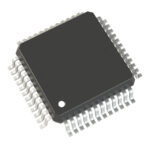 AD1974YSTZ-RL
The activity of extra discounts on wholesale prices is in full swing…
Please fill in your contact information and we will send you the latest wholesale price list.





