 ChipApex | Global Electronic Components Supplier
SEARCH
Search Product
Search Post
— IC芯片 | 连接器 | 传感器 | 被动器件 —
Search productSearch post
— IC芯片 | 连接器 | 传感器 | 被动器件 —
Consult the customer manager about the wholesale price.
consultation hotline:86-132-6715-2157
email:[email protected]
Contact the product manager for consultation. One-stop consultation is available.
Do you want a lower wholesale price? Please send us your inquiry and we will reply immediately.
The AD21489WBCPZ202 is an automotive-grade digital signal processor from Analog Devices, belonging to the fourth-generation SHARC family. It features a single-instruction, multiple-data (SIMD) computational architecture optimized for high-performance audio processing. The device operates at a maximum clock frequency of 450 MHz and delivers up to 2700 MFLOPS. Key specifications include 5 Mbits of on-chip RAM, 4 Mbits of on-chip ROM, and support for 32-bit/40-bit floating-point arithmetic. It integrates specialized peripherals such as four asynchronous sample rate converters (ASRC), eight serial ports (SPORT), and an S/PDIF transceiver.
Verify that the specific suffix indicates automotive grade qualification. Confirm package availability matches the required footprint, as the ADSP-21489 series supports multiple packages including 176-lead LQFP EPAD, 100-lead LQFP EPAD, and 88-lead LFCSP. Ensure supply chain sources provide original manufacturer documentation to confirm authenticity and revision level.
Select this model when automotive reliability is required alongside high-end audio processing capabilities. The 450 MHz speed and 5 Mbit RAM distinguish it from lower-tier models like the ADSP-21483 or ADSP-21486. Consider the 88-lead LFCSP option if board space is constrained, noting that this package variant is limited to 400 MHz operation. Verify code compatibility with existing SHARC-based designs if migrating from previous generations.
This component is part of the ADSP-2148x family, which includes the ADSP-21483, ADSP-21486, ADSP-21487, and ADSP-21488. All members share source code compatibility and similar architectural foundations but differ in memory size, clock speed, and peripheral configurations. The ADSP-21489 represents the high-performance end of this lineup, offering the maximum clock speed and substantial on-chip memory resources.
Direct pin-compatible substitutes within the same family include the ADSP-21483, ADSP-21486, ADSP-21487, and ADSP-21488. Note that these alternatives may have different clock speeds (e.g., 400 MHz) or reduced memory capacities. Ensure that the replacement meets the specific performance requirements of the application, particularly regarding real-time processing latency and memory bandwidth.
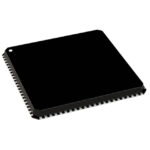 AD21489WBCPZ202
The activity of extra discounts on wholesale prices is in full swing…
Please fill in your contact information and we will send you the latest wholesale price list.




