 ChipApex | Global Electronic Components Supplier
SEARCH
Search Product
Search Post
— IC芯片 | 连接器 | 传感器 | 被动器件 —
Search productSearch post
— IC芯片 | 连接器 | 传感器 | 被动器件 —
Consult the customer manager about the wholesale price.
consultation hotline:86-132-6715-2157
email:[email protected]
Contact the product manager for consultation. One-stop consultation is available.
Do you want a lower wholesale price? Please send us your inquiry and we will reply immediately.
The AD22050N is a single-supply difference amplifier designed for amplifying and low-pass filtering small differential voltages from sources with large common-mode voltages. It features a default gain of x20, alterable from x1 to x160 via external resistors. The input common-mode range extends from below ground to 6x(VS – 1 V), supporting supply voltages from +3.0 V to +36 V. The output spans from 20 mV to (VS – 0.2) V. Key specifications include a differential input resistance of 400 kΩ, transient spike protection up to 60 V, and reversed supply protection down to –34 V. Operating temperature ranges from –40°C to +125°C.
Verify the specific package option required for the design, as the AD22050 family includes Plastic DIP (N-8) and Plastic SOIC (SO-8) variants. Ensure the ordering suffix matches the desired form factor, noting that reel quantities for the SOIC version require increments of 2,500 pieces. Confirm the temperature range specification aligns with the application environment requirements before finalizing the purchase order.
Select the AD22050N when a high-gain difference amplifier is needed to interface sensors with large common-mode voltages to single-supply systems. Consider the fixed 400 kΩ differential input resistance and the need for external components if gain adjustment or specific filter characteristics are required. Evaluate the output drive capability against the load impedance to ensure the output can swing adequately within the supply constraints.
The AD22050N belongs to the AD22050 series of single-supply sensor interface amplifiers manufactured by Analog Devices. This series is engineered for applications requiring precise amplification of small differential signals superimposed on large common-mode voltages. The N suffix specifically denotes the Plastic Mini-DIP package variant, distinguishing it from the SOIC package options available within the same functional family.
Direct replacements within the same family include the AD22050R and AD22050R-Reel, which share identical electrical specifications but differ in packaging. Verify pin compatibility and thermal performance when substituting between DIP and SOIC formats.
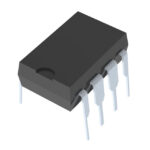 AD22050N
The activity of extra discounts on wholesale prices is in full swing…
Please fill in your contact information and we will send you the latest wholesale price list.





