 ChipApex | Global Electronic Components Supplier
SEARCH
Search Product
Search Post
— IC芯片 | 连接器 | 传感器 | 被动器件 —
Search productSearch post
— IC芯片 | 连接器 | 传感器 | 被动器件 —
Consult the customer manager about the wholesale price.
consultation hotline:86-132-6715-2157
email:[email protected]
Contact the product manager for consultation. One-stop consultation is available.
Do you want a lower wholesale price? Please send us your inquiry and we will reply immediately.
The AD232JN is a dual transmitter and receiver RS-232 interface integrated circuit manufactured by Analog Devices Inc. It operates within a single 5V power supply range, supporting data rates up to 120 kbps. The device features two drivers and two receivers for full-duplex communication. It includes internal charge pumps to generate the required RS-232 voltage levels without external components. The component is designed for industrial applications with an operating temperature range from -40°C to +85°C.
Verify the specific suffix 'JN' indicates the PDIP-16 package variant when sourcing. Confirm RoHS compliance status as manufacturing processes evolve. Check for obsolescence notices or last-time buy notifications from Analog Devices. Ensure the supplier provides original manufacturer documentation to avoid counterfeit parts. Validate that the part number matches the exact electrical specifications required for the design.
Select this component when a dual-channel RS-232 transceiver is needed with single-supply operation. Compare against MAX232 equivalents for pin compatibility and electrical performance differences. Consider the ADM232 series for enhanced ESD protection if system requirements demand higher robustness. Evaluate the package type availability for PCB layout constraints. Verify that the 120 kbps data rate meets the application's throughput needs.
The AD232JN belongs to the ADM232 family of RS-232 transceivers from Analog Devices. This family provides reliable serial communication interfaces for microcontrollers and DSPs. The JN suffix typically denotes a plastic dual in-line package suitable through-hole mounting. These devices are widely used in legacy and modern industrial interfaces where RS-232 standards remain prevalent.
The MAX232 is a common functional substitute but may require external capacitors depending on the specific variant. The ADM232ARZ offers similar functionality with potentially improved ESD characteristics. Verify pin-to-pin compatibility before substitution. Check datasheet differences regarding drive strength and output voltage levels.
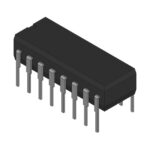 AD232JN
The activity of extra discounts on wholesale prices is in full swing…
Please fill in your contact information and we will send you the latest wholesale price list.




