 ChipApex | Global Electronic Components Supplier
SEARCH
Search Product
Search Post
— IC芯片 | 连接器 | 传感器 | 被动器件 —
Search productSearch post
— IC芯片 | 连接器 | 传感器 | 被动器件 —
Consult the customer manager about the wholesale price.
consultation hotline:86-132-6715-2157
email:[email protected]
Contact the product manager for consultation. One-stop consultation is available.
Do you want a lower wholesale price? Please send us your inquiry and we will reply immediately.
The AD2429KCPZ is an Automotive Audio Bus (A2B) transceiver from Analog Devices, designed for high-fidelity digital audio transmission in automotive environments. It operates as a slave node within a single-master, multiple-slave topology, supporting up to two discoverable downstream slaves. The device features a 32-LFCSP package and supports I²C control and multichannel I²S/TDM data interfaces with resolutions ranging from 8-bit to 32-bit. It includes four PDM microphone inputs and programmable settings for EMC optimization. Qualified under AEC-Q100 standards, it functions within a supply voltage range of 3V to 3.63V.
Verify the specific grade and temperature rating during procurement, as the AD2429 family includes consumer, industrial, and automotive grades. Confirm that the K suffix corresponds to the required automotive qualification level. Check for end-of-life status or obsolescence notices from Analog Devices prior to finalizing component selection for long-term production designs.
Select the AD2429KCPZ when designing a slave node in an A2B network requiring connection to up to two additional downstream slaves. Ensure the host controller supports the required I²C addressing scheme using ADR1/IO1 and ADR2/IO2 pins. Verify that the power supply architecture meets the VTRXVDD and VIN requirements for bus-powered or locally powered configurations.
The AD2429W series complements the AD2428W by offering distinct functional TRX block configurations. While the AD2428W supports both TRX A and B blocks, the AD2429W utilizes only the TRX B block, limiting its downstream discovery capability to two nodes. This makes it suitable for specific topological constraints where fewer downstream connections are needed compared to the AD2428W.
Direct replacements within the same family include other AD2429 variants such as AD2429BCPZ or AD2429KCPZ-RL, depending on packaging and grade requirements. Cross-model substitution with AD2428W devices is possible if the application requires dual TRX blocks and support for up to ten downstream slaves, provided pin compatibility and software configuration adjustments are accounted for.
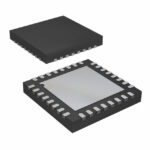 AD2429KCPZ
The activity of extra discounts on wholesale prices is in full swing…
Please fill in your contact information and we will send you the latest wholesale price list.





