 ChipApex | Global Electronic Components Supplier
SEARCH
Search Product
Search Post
— IC芯片 | 连接器 | 传感器 | 被动器件 —
Search productSearch post
— IC芯片 | 连接器 | 传感器 | 被动器件 —
Consult the customer manager about the wholesale price.
consultation hotline:86-132-6715-2157
email:[email protected]
Contact the product manager for consultation. One-stop consultation is available.
Do you want a lower wholesale price? Please send us your inquiry and we will reply immediately.
The AD2S1210WDSTZ is a complete monolithic resolver-to-digital converter (RDC) with 10-bit to 16-bit programmable resolution. It integrates an on-board sinusoidal oscillator for resolver excitation and employs a Type II tracking loop to convert sine/cosine inputs into digital angle and velocity data. The device supports differential inputs of 3.15 V p-p ± 27% at frequencies between 2 kHz and 20 kHz. It offers parallel and serial data ports, absolute position/velocity outputs, and incremental encoder emulation. Rated for -40°C to +125°C, it is AEC-Q100 qualified and approved for ASIL B automotive applications.
Verify the specific grade suffix (e.g., WDSTZ indicates D-grade, wide temperature) against the required operating temperature range (-40°C to +125°C). Confirm that the ordering suffix matches the desired package and thermal characteristics as defined in the manufacturer's current ordering guide. Ensure compliance with ISO 26262 requirements if ASIL B certification documentation is needed for the final assembly.
Select based on required angular accuracy grades (B/D grades offer ±2.5 arc min vs. A/C grades at ±5 arc min). Choose resolution (10-16 bit) considering the trade-off with maximum tracking rate and bandwidth. Ensure the system clock frequency (CLKIN) supports the desired resolution and tracking speed. Verify logic voltage compatibility (VDRIVE 2.3 V to 5.25 V) with the host microcontroller or DSP.
The AD2S1210 series replaces older discrete RDC solutions by integrating the reference oscillator, analog front-end, and digital conversion engine into a single LQFP-48 package. The 'W' suffix denotes the extended industrial temperature range (-40°C to +125°C), making it suitable for harsh automotive environments compared to commercial grade variants.
Direct pin-compatible replacements within the same family include AD2S1210ASTZ and AD2S1210BSTZ, though these may differ in temperature rating or accuracy grade. Cross-family replacements require careful evaluation of oscillator integration and interface timing differences.
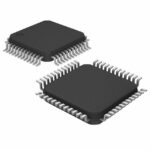 AD2S1210WDSTZ
The activity of extra discounts on wholesale prices is in full swing…
Please fill in your contact information and we will send you the latest wholesale price list.





