 ChipApex | Global Electronic Components Supplier
SEARCH
Search Product
Search Post
— IC芯片 | 连接器 | 传感器 | 被动器件 —
Search productSearch post
— IC芯片 | 连接器 | 传感器 | 被动器件 —
Consult the customer manager about the wholesale price.
consultation hotline:86-132-6715-2157
email:[email protected]
Contact the product manager for consultation. One-stop consultation is available.
Do you want a lower wholesale price? Please send us your inquiry and we will reply immediately.
The AD2S44SM10B is a Synchro or Resolver to Digital Converter manufactured by Analog Devices Inc. It converts analog synchro or resolver signals into digital data using a 14-bit resolution architecture. The device operates with dual power supplies, typically ±15 V, supporting a maximum negative supply voltage of -15.75 V and a minimum of -14.25 V. It features a built-in test capability and accepts a 26 V reference input. The component is housed in a Metal DIP-32 package, measuring 1.750 x 1.050 inches with a height of 0.225 inches. It is designed for high-precision angular measurement applications.
Verify the specific suffix 'SM10B' against the official Analog Devices datasheet to confirm pinout compatibility and temperature range specifications. Ensure that the required ±15 V power supply rails are available within the specified tolerance limits (-14.25 V to -15.75 V for negative rail). Confirm that the DIP-32 package form factor fits the target PCB layout constraints.
Select this component when 14-bit resolution and 4 arc minute accuracy are required for rotary position feedback. It is suitable for environments requiring robust metal packaging and dual-supply operation. Compare against the AD2S82 if single-supply or lower pin-count solutions are needed, noting the AD2S82 offers 2 arc minute accuracy but in a different package type.
The AD2S44 series belongs to Analog Devices' portfolio of resolver-to-digital converters, which are critical for closed-loop control in industrial and aerospace sectors. This specific model utilizes a metal DIP package, distinguishing it from surface-mount variants like the AD2S44TM18B. It serves as a legacy interface solution for converting mechanical shaft positions into digital data for microprocessor-based control systems.
The AD2S82 is a documented alternative offering higher angular accuracy (2 arc minutes) but requires a different package (PQCC44) and operates on a single 12 V supply. Verify interface compatibility and board space requirements before substituting.
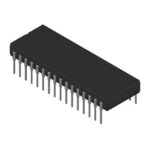 AD2S44SM10B
The activity of extra discounts on wholesale prices is in full swing…
Please fill in your contact information and we will send you the latest wholesale price list.





