 ChipApex | Global Electronic Components Supplier
SEARCH
Search Product
Search Post
— IC芯片 | 连接器 | 传感器 | 被动器件 —
Search productSearch post
— IC芯片 | 连接器 | 传感器 | 被动器件 —
Consult the customer manager about the wholesale price.
consultation hotline:86-132-6715-2157
email:[email protected]
Contact the product manager for consultation. One-stop consultation is available.
Do you want a lower wholesale price? Please send us your inquiry and we will reply immediately.
The AD2S44UM is a low-cost, 14-bit dual-channel synchro/resolver-to-digital converter housed in a 32-lead DIL hybrid package. It features independent Type II servo loop tracking converters with a typical accuracy of ±2.6 arc minutes between -25°C and +85°C, or ±4.0 arc minutes over the full -55°C to +125°C range. The device supports signal frequencies from 400 Hz to 2600 Hz and offers a high tracking rate of 20 revolutions per second. Built-in test (BIT) functionality provides fault indication, while ratiometric conversion ensures noise immunity.
Verify the specific voltage option code suffix when ordering, as the base part number requires additional characters to define signal/reference voltages (e.g., Z=1 for 11.8V/26V). Confirm the temperature grade (U vs T) matches the operational environment requirements. Ensure compatibility with the required power supply rails of ±15 V DC.
Select the appropriate input format option based on whether the application uses synchro (3-wire) or resolver (4-wire) transducers. Consider the acceleration constant (Ka = 62,000 sec⁻²) when evaluating dynamic performance for rapidly changing positions. External scaling resistors may be necessary if nonstandard signal or reference voltages are used, requiring precise matching to maintain accuracy.
The AD2S44 is part of Analog Devices' specialized data acquisition converter family, designed for high-reliability environments. It utilizes BiMOS II technology to combine CMOS digital logic with bipolar linear circuits, reducing internal component count. Related products include the monolithic AD2S80A series and the hybrid SDC/RDC1740 series.
Public confirmed substitute part numbers are not available in the provided documentation. The datasheet references other Analog Devices products such as the AD2S80A series and SDC/RDC1740 series but does not explicitly list them as direct pin-compatible replacements.
The BIT output goes low when the error exceeds 55 LSBs, indicating an angular error greater than approximately one degree. It clears when the error drops below 45 LSBs, providing hysteresis to prevent flickering.
The typical maximum tracking rate is 20 revolutions per second (rev/sec).
Yes, signal and reference inputs can be resistively scaled using external resistors to accommodate voltages outside the nominal ±10% limits, though resistor matching is critical for maintaining accuracy.
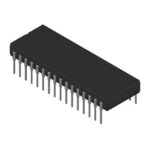 AD2S44UM
The activity of extra discounts on wholesale prices is in full swing…
Please fill in your contact information and we will send you the latest wholesale price list.






