 ChipApex | Global Electronic Components Supplier
SEARCH
Search Product
Search Post
— IC芯片 | 连接器 | 传感器 | 被动器件 —
Search productSearch post
— IC芯片 | 连接器 | 传感器 | 被动器件 —
Consult the customer manager about the wholesale price.
consultation hotline:86-132-6715-2157
email:[email protected]
Contact the product manager for consultation. One-stop consultation is available.
Do you want a lower wholesale price? Please send us your inquiry and we will reply immediately.
The AD2S65412 is a hybrid Digital-to-Synchro/Resolver (D2SR) converter manufactured by Analog Devices Inc. It functions as a specialized data acquisition component designed to convert digital inputs into synchro or resolver signals. The device operates within a supply voltage range of 14.25V to 15.75V and supports a resolution of 14:16 bits. It utilizes a parallel port interface for data transmission and is housed in a 32-CDIP package measuring 0.900 inches (22.86mm). The unit is rated for operation in temperatures ranging from -55°C to +125°C, ensuring reliability in demanding environments.
Verify the specific manufacturer designation, as some listings indicate Rochester Electronics LLC as the source rather than Analog Devices Inc. Confirm the exact package type and pin configuration against the official datasheet before integration. Ensure that the supply voltage requirements align with the system design, specifically the 14.25V to 15.75V range. Check for any ordering suffixes that may denote temperature grades or packaging variations.
Select this component when a dedicated hybrid solution for digital-to-synchro or digital-to-resolver conversion is required. The parallel interface dictates system bus compatibility, while the wide temperature range suits harsh environments. Consider the 32-CDIP footprint for PCB layout constraints. This part is suitable for applications where high-resolution angular position data must be transmitted via traditional synchro or resolver protocols.
The AD2S65412 belongs to the AD2S65 series of hybrid converters produced by Analog Devices. These devices are engineered to bridge the gap between modern digital control systems and legacy analog feedback mechanisms. The series includes variants like the AD2S65412B, which may differ in manufacturing origin or specific qualification standards while maintaining core functional equivalence.
Public confirmed substitute part numbers are not available in the provided documentation. Verify compatibility with existing system interfaces before considering alternative models.
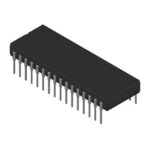 AD2S65412
The activity of extra discounts on wholesale prices is in full swing…
Please fill in your contact information and we will send you the latest wholesale price list.







