 ChipApex | Global Electronic Components Supplier
SEARCH
Search Product
Search Post
— IC芯片 | 连接器 | 传感器 | 被动器件 —
Search productSearch post
— IC芯片 | 连接器 | 传感器 | 被动器件 —
Consult the customer manager about the wholesale price.
consultation hotline:86-132-6715-2157
email:[email protected]
Contact the product manager for consultation. One-stop consultation is available.
Do you want a lower wholesale price? Please send us your inquiry and we will reply immediately.
The AD5114BCPZ80-RL7 is a single-channel, nonvolatile digital potentiometer featuring 32 adjustment positions and an I2C-compatible interface. It offers nominal resistor values of 10 kΩ or 80 kΩ with a maximum tolerance error of ±8%. The device operates on a 2.3 V to 5.5 V analog supply and supports logic levels from 1.8 V to VDD. Key specifications include a wiper current of ±6 mA (for the 10 kΩ version), a rheostat mode temperature coefficient of 35 ppm/°C, and low power consumption of 2.5 µA max at 2.7 V. It utilizes EEPROM for data retention, ensuring settings persist across power cycles.
Verify the specific resistance value (10 kΩ or 80 kΩ) required for the application, as the base model number covers both options. Confirm that the RL7 suffix corresponds to the reel packaging format intended for surface mount assembly. Ensure the design accounts for the 8-lead LFCSP package dimensions and thermal requirements during procurement planning.
Select the AD5114 variant when 32 tap positions are sufficient for the required resolution. Choose between the 10 kΩ and 80 kΩ versions based on impedance matching needs; note that the 10 kΩ version supports higher continuous terminal currents up to ±6 mA compared to ±1.5 mA for the 80 kΩ version. Verify that the system voltage falls within the 2.3 V to 5.5 V range for proper operation.
This component belongs to the AD511x family of single-channel digital potentiometers manufactured by Analog Devices Inc. The family includes variants with different resolutions (128, 64, and 32 positions) and interfaces (I2C, Up/Down, Push-button). The AD5114 specifically provides the lowest position count in this series, suitable for applications requiring fewer adjustment steps while maintaining nonvolatile storage and I2C connectivity.
Direct functional replacements within the same family include the AD5110 (128 positions) and AD5112 (64 positions) if higher resolution is acceptable. For identical pinout and interface but different resolution, verify electrical parameters such as bandwidth and settling time, which vary slightly between models due to internal architecture differences.
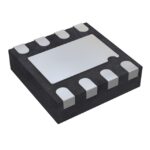 AD5114BCPZ80-RL7
The activity of extra discounts on wholesale prices is in full swing…
Please fill in your contact information and we will send you the latest wholesale price list.




