 ChipApex | Global Electronic Components Supplier
SEARCH
Search Product
Search Post
— IC芯片 | 连接器 | 传感器 | 被动器件 —
Search productSearch post
— IC芯片 | 连接器 | 传感器 | 被动器件 —
Consult the customer manager about the wholesale price.
consultation hotline:86-132-6715-2157
email:[email protected]
Contact the product manager for consultation. One-stop consultation is available.
Do you want a lower wholesale price? Please send us your inquiry and we will reply immediately.
The AD5122ABRUZ10-RL7 is a dual-channel, nonvolatile digital potentiometer from Analog Devices. It features two independent 10 kΩ resistive networks with 128 tap positions controlled via an I²C interface. The device operates on a single supply voltage ranging from 2.3 V to 5.5 V and supports logic levels between 1.8 V and 5.5 V. Key electrical specifications include a maximum resistor tolerance of ±8%, a temperature coefficient of 35 ppm/°C, and a bandwidth of 3 MHz for the 10 kΩ configuration. It provides wiper currents up to ±6 mA and includes EEPROM storage to retain settings across power cycles.
Verify component authenticity through authorized distributors or direct manufacturer channels. Confirm package integrity upon receipt, as the TSSOP-16 housing is sensitive to mechanical stress. Ensure ESD precautions are followed during handling to prevent damage to the internal circuitry. Cross-reference datasheet revisions to confirm compatibility with specific design requirements.
Select this model when dual-channel control with I²C communication is required. The 10 kΩ resistance value suits applications needing moderate current drive capabilities up to ±6 mA. Consider the AD5142A variant if 256-position resolution is necessary, or the AD5122 (non-A suffix) if SPI interface is preferred over I²C. Verify that the 128-tap resolution meets the precision requirements of the target analog signal path.
This component belongs to the AD5122A/AD5142A family of dual-channel digital potentiometers. The 'A' suffix denotes I²C interface capability, distinguishing it from the SPI-based AD5122. The 'B' indicates an 8% tolerance grade, while 'RUZ' specifies the 16-lead TSSOP package. The '-RL7' suffix typically indicates reel packaging for automated assembly processes.
Direct functional substitutes within the same family include the AD5122BRUZ10-RL7 (SPI interface) or AD5142ABRUZ10-RL7 (I²C interface with 256 taps). Ensure pinout compatibility and verify that the replacement part's interface protocol matches the system controller. Check for any differences in EEPROM endurance or power-up restore times.
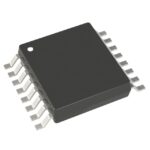 AD5122ABRUZ10-RL7
The activity of extra discounts on wholesale prices is in full swing…
Please fill in your contact information and we will send you the latest wholesale price list.





