 ChipApex | Global Electronic Components Supplier
SEARCH
Search Product
Search Post
— IC芯片 | 连接器 | 传感器 | 被动器件 —
Search productSearch post
— IC芯片 | 连接器 | 传感器 | 被动器件 —
Consult the customer manager about the wholesale price.
consultation hotline:86-132-6715-2157
email:[email protected]
Contact the product manager for consultation. One-stop consultation is available.
Do you want a lower wholesale price? Please send us your inquiry and we will reply immediately.
The AD5175BRMZ-10 is a single-channel digital rheostat featuring 1024-position resolution and a nominal resistance of 10 kΩ. It integrates 50-times programmable (50-TP) nonvolatile memory to retain wiper settings across power cycles. The device operates on a single supply from 2.7 V to 5.5 V or dual supplies of ±2.5 V to ±2.75 V. Communication is handled via an I²C-compatible interface supporting standard (100 kHz) and fast (400 kHz) modes. Key electrical specifications include a temperature coefficient of 35 ppm/°C, ±15% resistor tolerance, and a typical supply current of 1 μA.
Verify the specific package variant required, as the AD5175 series includes both MSOP and LFCSP options. Confirm that the 10 kΩ resistance value matches the circuit design requirements. Ensure the I²C bus configuration supports the available slave addresses determined by the ADDR pin state. Check for any lead-free or RoHS compliance documentation if required by the manufacturing process.
Select this component when a compact, digitally controlled variable resistor with persistent settings is needed. The 50-TP memory allows for field adjustments without external power-dependent storage. Consider the dual-supply capability if bipolar signal handling is required. Verify that the I²C clock speed requirements align with the standard or fast mode support. Ensure the thermal management plan accounts for the package's thermal resistance characteristics.
The AD5175 belongs to Analog Devices' family of digital potentiometer ICs designed for precision analog signal conditioning. Unlike volatile digital pots, the 50-TP feature provides a middle ground between fully volatile registers and one-time programmable devices, allowing for limited reprogramming. This makes it suitable for applications requiring occasional updates to resistance values after initial deployment.
When replacing older mechanical rheostats, ensure the new digital solution meets the required power dissipation and current handling limits. For other digital potentiometers, verify compatibility with the existing I²C addressing scheme and register map. If a different resolution is acceptable, compare the INL/DNL specifications to ensure signal integrity is maintained.
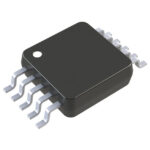 AD5175BRMZ-10
The activity of extra discounts on wholesale prices is in full swing…
Please fill in your contact information and we will send you the latest wholesale price list.





