 ChipApex | Global Electronic Components Supplier
SEARCH
Search Product
Search Post
— IC芯片 | 连接器 | 传感器 | 被动器件 —
Search productSearch post
— IC芯片 | 连接器 | 传感器 | 被动器件 —
Consult the customer manager about the wholesale price.
consultation hotline:86-132-6715-2157
email:[email protected]
Contact the product manager for consultation. One-stop consultation is available.
Do you want a lower wholesale price? Please send us your inquiry and we will reply immediately.
The AD5201BRMZ50-REEL7 is a 33-position digital potentiometer from Analog Devices, housed in a 10-lead MSOP package. It features a nominal end-to-end resistance of 50 kΩ with a tolerance of ±30% and a temperature coefficient of 500 ppm/°C. The device operates on a single supply voltage ranging from 2.7 V to 5.5 V or dual supplies up to ±2.7 V. It utilizes a 3-wire SPI-compatible serial interface for control, including CS, CLK, and SDI pins. The internal latch holds the programmed resistance value, which defaults to midscale upon power-up. A shutdown pin allows for low-power operation by opening the A terminal and shorting the wiper to B.
Verify the specific resistance value suffix (10 vs 50) against design requirements, as the AD5201 series includes both 10 kΩ and 50 kΩ variants. Confirm the package type is MSOP-10 and check for RoHS compliance status. Ensure the serial interface timing parameters align with the host microcontroller's SPI clock speeds. Review absolute maximum ratings to prevent damage from overvoltage conditions.
Select the AD5201BRMZ50 variant when a higher end-to-end resistance of 50 kΩ is required compared to the 10 kΩ version. Consider the ±30% tolerance if precise absolute resistance is critical, as calibration may be necessary. Evaluate the 50 Ω wiper resistance impact in zero-scale conditions. Ensure the application supports the volatile memory nature, where settings are lost upon power removal unless retained by external means.
This component belongs to the AD5200/AD5201 family of programmable resistor devices. The AD5201 specifically offers 33 positions, contrasting with the AD5200's 256 positions. Both share identical pinouts and interface protocols but differ in resolution and internal tap counts. The BRMZ suffix indicates the industrial temperature range (-40°C to +85°C) and MSOP packaging.
Direct functional substitutes within the same family include the AD5201BRMZ10 for applications requiring 10 kΩ resistance instead of 50 kΩ. Other compatible parts must support 3-wire SPI control and similar voltage ranges. Verify pin compatibility and thermal characteristics when substituting.
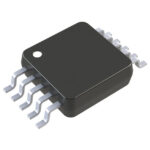 AD5201BRMZ50-REEL7
The activity of extra discounts on wholesale prices is in full swing…
Please fill in your contact information and we will send you the latest wholesale price list.





