 ChipApex | Global Electronic Components Supplier
SEARCH
Search Product
Search Post
— IC芯片 | 连接器 | 传感器 | 被动器件 —
Search productSearch post
— IC芯片 | 连接器 | 传感器 | 被动器件 —
Consult the customer manager about the wholesale price.
consultation hotline:86-132-6715-2157
email:[email protected]
Contact the product manager for consultation. One-stop consultation is available.
Do you want a lower wholesale price? Please send us your inquiry and we will reply immediately.
The AD5204BRU50-REEL is a quad-channel digital potentiometer IC from Analog Devices, featuring 256 programmable positions per channel. It operates on a single supply of +2.7 V to +5.5 V or dual supplies of ±2.3 V to ±2.7 V. The device utilizes a 3-wire SPI-compatible serial interface for data input and includes an SDO pin for daisy-chaining capabilities. Key electrical parameters include a nominal resistance tolerance of ±30%, a temperature coefficient of 700 ppm/°C, and a typical power supply current of 12 μA at 5 V. The unit is housed in a 24-lead TSSOP package and functions over an industrial temperature range of −40°C to +85°C.
Verify the specific suffix 'BRU' corresponds to the TSSOP-24 package and '-REEL' indicates tape-and-reel packaging. Confirm RoHS compliance status as manufacturing revisions may alter environmental declarations. Ensure the ordered quantity matches the reel specifications provided by the distributor. Cross-reference the datasheet revision G for any updates to absolute maximum ratings or thermal characteristics before finalizing procurement.
Select this component when four independent digitally controlled resistors are required within a single footprint. The 50 kΩ terminal resistance offers a balance between bandwidth and noise performance compared to 10 kΩ or 100 kΩ variants. Verify that the system logic levels align with the specified VIH and VIL thresholds for the chosen supply voltage. Consider the 700 ppm/°C temperature coefficient if high precision stability across wide temperature ranges is critical.
This part belongs to the AD5204/AD5206 family of 4-/6-channel digital potentiometers. The 'B' grade indicates a wider operating temperature range and potentially tighter initial tolerance compared to lower grades. The 'RU' designation specifies the 24-lead Thin Shrink Small Outline Package (TSSOP). This series serves as a direct electronic replacement for mechanical potentiometers in volume production environments.
The AD5204BRZ50 is a pin-compatible alternative available in a 24-lead SOIC package. Both devices share identical electrical specifications and functionality. Selection between BRU and BRZ depends primarily on PCB footprint requirements and soldering process capabilities. No functional changes occur due to package substitution.
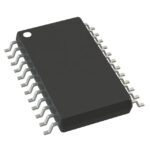 AD5204BRU50-REEL
The activity of extra discounts on wholesale prices is in full swing…
Please fill in your contact information and we will send you the latest wholesale price list.





