 ChipApex | Global Electronic Components Supplier
SEARCH
Search Product
Search Post
— IC芯片 | 连接器 | 传感器 | 被动器件 —
Search productSearch post
— IC芯片 | 连接器 | 传感器 | 被动器件 —
Consult the customer manager about the wholesale price.
consultation hotline:86-132-6715-2157
email:[email protected]
Contact the product manager for consultation. One-stop consultation is available.
Do you want a lower wholesale price? Please send us your inquiry and we will reply immediately.
The AD5220BR50-REEL7 is a single-channel digital potentiometer IC from Analog Devices, featuring a nominal resistance of 50 kΩ and 128 tap positions. It operates on a single supply voltage ranging from 2.7 V to 5.5 V with a typical supply current of 15 µA. The device utilizes an Up/Down serial interface controlled by CLK, CS, and U/D pins. Key electrical characteristics include a resistor tolerance of ±30%, a temperature coefficient of 800 ppm/°C, and a wiper resistance of 40 Ω to 100 Ω. It is housed in an 8-lead SOIC package and supports an operating temperature range of -40°C to +85°C.
Verify the specific suffix REEL7 indicates reel packaging when sourcing. Confirm RoHS compliance status for the BR variant against current manufacturing standards. Ensure the 50 kΩ resistance value matches the circuit requirements, as other variants like 10 kΩ or 100 kΩ exist within the same family. Check for automotive qualified versions if environmental stress testing is required.
Select this component for applications requiring simple incremental/decremental control without complex SPI protocols. The 50 kΩ value offers a balance between bandwidth and power dissipation compared to lower or higher resistance options. Consider the volatile memory nature, which resets to mid-scale upon power-up, ensuring initial circuit states are managed appropriately in the design phase.
This part belongs to the AD5220 family of digital potentiometers, which provides a direct replacement for mechanical pots in various analog signal conditioning roles. The 'BR' designation typically refers to the commercial grade temperature range and SOIC package type, while '50' specifies the 50 kΩ end-to-end resistance. The family shares common architecture but varies in resistance values and package styles.
Direct pin-compatible replacements within the same series include AD5220BR10 (10 kΩ) and AD5220BR100 (100 kΩ). For automotive applications, consider the AD5220WBRZ50 variant. Verify that the interface timing requirements for the Up/Down clock are met by the controlling microcontroller.
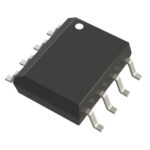 AD5220BR50-REEL7
The activity of extra discounts on wholesale prices is in full swing…
Please fill in your contact information and we will send you the latest wholesale price list.





