 ChipApex | Global Electronic Components Supplier
SEARCH
Search Product
Search Post
— IC芯片 | 连接器 | 传感器 | 被动器件 —
Search productSearch post
— IC芯片 | 连接器 | 传感器 | 被动器件 —
Consult the customer manager about the wholesale price.
consultation hotline:86-132-6715-2157
email:[email protected]
Contact the product manager for consultation. One-stop consultation is available.
Do you want a lower wholesale price? Please send us your inquiry and we will reply immediately.
The AD5220BRMZ100-R7 is a single-channel, 7-bit digitally controlled variable resistor (digital potentiometer) from Analog Devices. It features a nominal end-to-end resistance of 100 kΩ with a linear taper and 128 tap positions. The device operates on a supply voltage range of 2.7 V to 5.5 V, drawing a typical supply current of 15 µA at 5 V. It utilizes a simple three-wire serial interface consisting of Chip Select (CS), Clock (CLK), and Up/Down (U/D) control lines for wiper adjustment. The component is housed in an 8-lead Mini Small Outline Package (MSOP) and supports an operating temperature range from -40°C to +85°C.
Verify the specific ordering suffix '-R7' corresponds to the tape and reel packaging format required for automated assembly processes. Confirm that the 'Z' suffix indicates RoHS compliance if environmental regulations apply to the manufacturing site. Ensure the MSOP-8 package dimensions align with the PCB footprint design constraints before finalizing procurement orders.
Select this model when a high-resistance value of 100 kΩ is required compared to the 10 kΩ or 50 kΩ variants. The 100 kΩ version offers lower overall power consumption but exhibits slower settling times (6 ms) and reduced bandwidth (69 kHz) compared to lower resistance versions. Ensure the application can accommodate the 800 ppm/°C temperature coefficient associated with the higher resistance values.
This part belongs to the AD5220 family of single-channel digital potentiometers. It shares the same core architecture and interface as other variants like the AD5220BRMZ10 and AD5220BRMZ50, differing primarily in the internal resistor string value. The BRMZ designation identifies the commercial grade temperature range and the MSOP package type within the broader product line.
Direct pin-compatible substitutes within the same series include AD5220BRMZ10 (10 kΩ) and AD5220BRMZ50 (50 kΩ). When substituting, account for differences in bandwidth, settling time, and temperature coefficient, as these dynamic parameters vary significantly with the nominal resistance value. Other families require full schematic redesign due to interface or pinout differences.
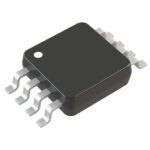 AD5220BRMZ100-R7
The activity of extra discounts on wholesale prices is in full swing…
Please fill in your contact information and we will send you the latest wholesale price list.





