 ChipApex | Global Electronic Components Supplier
SEARCH
Search Product
Search Post
— IC芯片 | 连接器 | 传感器 | 被动器件 —
Search productSearch post
— IC芯片 | 连接器 | 传感器 | 被动器件 —
Consult the customer manager about the wholesale price.
consultation hotline:86-132-6715-2157
email:[email protected]
Contact the product manager for consultation. One-stop consultation is available.
Do you want a lower wholesale price? Please send us your inquiry and we will reply immediately.
The AD5220BRZ10 is a single-channel, 7-bit digitally controlled variable resistor (digital potentiometer) manufactured by Analog Devices Inc. It features a nominal resistance of 10 kΩ with 128 tap positions and volatile memory. The device operates on a single supply voltage ranging from 2.7 V to 5.5 V, consuming a typical supply current of 15 µA at 5 V. It utilizes an Up/Down serial interface for wiper control. Key electrical characteristics include a nominal resistor tolerance of ±30%, a temperature coefficient of 800 ppm/°C, and a wiper resistance of 40 Ω. The component is housed in an 8-lead SOIC package and supports operation within a temperature range of -40°C to +85°C.
Verify the specific ordering suffix to confirm packaging type, such as REEL or REEL7, which indicates tape-and-reel quantities. Confirm RoHS compliance status via the 'Z' suffix in the part number. Ensure the required resistance value matches the '10' designation for 10 kΩ variants. Check availability through authorized distributors as stock levels fluctuate.
Select this component when a single-channel digital potentiometer with 10 kΩ resistance is required. The 7-bit resolution provides 128 steps, suitable for moderate precision adjustments. Consider the volatile memory characteristic, as wiper position resets upon power loss. Verify that the Up/Down interface aligns with the system's control logic capabilities.
The AD5220BRZ10 belongs to the AD5220 family of digital potentiometers. This family includes variants with different resistance values (50 kΩ, 100 kΩ) and package options (PDIP, MSOP). The BRZ10 specifically denotes the 10 kΩ version in an 8-lead SOIC package with RoHS compliance. Other family members share similar interface and performance characteristics but differ in terminal resistance and physical form factor.
Direct replacements within the same family include AD5220BRZ50 (50 kΩ) and AD5220BRZ100 (100 kΩ), provided the resistance value difference is acceptable for the application. Cross-family replacements require verification of interface compatibility and pinout alignment.
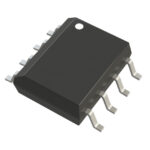 AD5220BRZ10
The activity of extra discounts on wholesale prices is in full swing…
Please fill in your contact information and we will send you the latest wholesale price list.





