 ChipApex | Global Electronic Components Supplier
SEARCH
Search Product
Search Post
— IC芯片 | 连接器 | 传感器 | 被动器件 —
Search productSearch post
— IC芯片 | 连接器 | 传感器 | 被动器件 —
Consult the customer manager about the wholesale price.
consultation hotline:86-132-6715-2157
email:[email protected]
Contact the product manager for consultation. One-stop consultation is available.
Do you want a lower wholesale price? Please send us your inquiry and we will reply immediately.
The AD5668BRUZ-3 is an octal, 16-bit, buffered voltage-output digital-to-analog converter (DAC) from Analog Devices. It operates on a single 2.7 V to 5.5 V supply and features an internal 2.5 V reference with 5 ppm/°C temperature coefficient, providing a 5 V full-scale output range. The device includes a power-on reset circuit that initializes outputs to midscale upon startup. It supports a versatile 3-wire serial interface compatible with SPI, QSPI, Microwire, and DSP standards, with clock rates up to 50 MHz. Key specifications include ±1 LSB differential nonlinearity, 95 kS/s sampling rate, and 6 µs settling time.
Verify the specific suffix '3' indicates the internal 2.5 V reference configuration during procurement. Confirm package availability matches the required TSSOP-16 form factor. Ensure compatibility with the intended operating voltage range of 2.7 V to 5.5 V. Check for RoHS compliance documentation if required by local regulations.
Select this component when an octal DAC with high precision (16-bit) and low power consumption is required. The internal 2.5 V reference simplifies design by eliminating external reference components. Consider the midscale power-on reset feature for applications requiring defined initial states. Verify that the 3-wire serial interface timing requirements align with the host microcontroller capabilities.
The AD5668BRUZ-3 belongs to the AD5628/AD5648/AD5668 denseDAC family. It shares pinout and functional similarities with the 12-bit AD5628 and 14-bit AD5648 variants, allowing for design flexibility across resolution requirements. The 'B' grade denotes specific linearity and accuracy performance levels within the product line.
Direct substitutes within the same family include AD5668ARUZ-3 (A Grade) for potentially tighter accuracy specifications. For lower resolution needs, AD5648 or AD5628 variants may be considered if pin compatibility is maintained. External reference versions like AD5668BRUZ-1 or AD5668BRUZ-2 are available if different reference voltages are preferred.
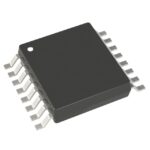 AD5668BRUZ-3
The activity of extra discounts on wholesale prices is in full swing…
Please fill in your contact information and we will send you the latest wholesale price list.





