 ChipApex | Global Electronic Components Supplier
SEARCH
Search Product
Search Post
— IC芯片 | 连接器 | 传感器 | 被动器件 —
Search productSearch post
— IC芯片 | 连接器 | 传感器 | 被动器件 —
Consult the customer manager about the wholesale price.
consultation hotline:86-132-6715-2157
email:[email protected]
Contact the product manager for consultation. One-stop consultation is available.
Do you want a lower wholesale price? Please send us your inquiry and we will reply immediately.
The AD5676ARUZ is an octal, 16-bit buffered voltage output digital-to-analog converter (DAC) from Analog Devices. It operates on a single 2.7 V to 5.5 V supply and features a versatile SPI interface supporting clock rates up to 50 MHz with readback or daisy-chain capabilities. The device includes user-selectable gain of 1 or 2 via the GAIN pin, allowing full-scale outputs of VREF or 2 × VREF. It guarantees monotonicity by design and incorporates per-channel power-down modes that reduce current consumption to typically 1 µA. The component is housed in a 20-lead TSSOP package and functions within a temperature range of −40°C to +125°C.
Verify the specific grade (A or B) required for your application, as INL and offset specifications vary between grades. Confirm the package type matches the design; the ARUZ suffix denotes the 20-lead TSSOP package. Ensure the external reference voltage source aligns with the device's requirement for an external reference input, as this model does not include an internal reference.
Select the AD5676 when eight independent analog outputs are needed with 16-bit precision. Choose Grade A for tighter linearity specifications (±3 LSB INL) or Grade B for standard performance. Consider the LFCSP variant if board space is limited, though the ARUZ is strictly TSSOP. Verify logic voltage compatibility, as the VLOGIC pin supports 1.62 V to 5.5 V, ensuring interoperability with various microcontrollers.
The AD5676 belongs to the nanoDAC+ family, designed for low-power, high-performance applications. Unlike the AD5676R variant, which integrates an internal reference, the AD5676 requires an external reference voltage. This distinction allows designers to select custom reference sources for improved stability or lower noise characteristics in precision signal chain designs.
The AD5676R is a direct functional substitute if an integrated internal reference is preferred over an external one. For applications requiring fewer channels, the AD5672 (quad) or AD5671 (dual) may be suitable alternatives. Ensure any replacement maintains the 16-bit resolution and SPI interface compatibility.
No, the AD5676 requires an external reference voltage applied to the VREF pin. The AD5676R variant includes an internal reference.
On the TSSOP package, the GAIN pin determines the span: tying it to GND sets a 0 V to VREF range, while tying it to VLOGIC sets a 0 V to 2 × VREF range.
The AD5676 supports serial clock rates up to 50 MHz for write operations.
Yes, the AD5676 is guaranteed monotonic by design due to its segmented string DAC architecture.
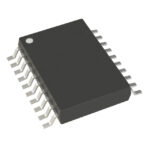 AD5676ARUZ
The activity of extra discounts on wholesale prices is in full swing…
Please fill in your contact information and we will send you the latest wholesale price list.






