ChipApex | Global Electronic Components Supplier
SEARCH
Search Product
Search Post
— IC芯片 | 连接器 | 传感器 | 被动器件 —
Search productSearch post
— IC芯片 | 连接器 | 传感器 | 被动器件 —
Consult the customer manager about the wholesale price.
consultation hotline:86-132-6715-2157
email:[email protected]
Contact the product manager for consultation. One-stop consultation is available.
Do you want a lower wholesale price? Please send us your inquiry and we will reply immediately.
The AD5676RACPZ-RL is an octal, 16-bit buffered voltage output digital-to-analog converter (DAC) from Analog Devices. It features a low-drift 2.5 V internal reference with a typical temperature coefficient of 2 ppm/°C and user-selectable gain of 1 or 2, providing full-scale outputs of 2.5 V or 5 V respectively. The device operates on a single 2.7 V to 5.5 V supply and supports a 50 MHz SPI interface with readback or daisy-chain capabilities. Packaged in a 20-lead LFCSP, it includes a power-on reset circuit and RSTSEL pin for controlled startup states.
Verify the specific grade (A or B) required for your application, as INL and offset specifications vary between grades. Confirm the package type matches the design footprint, as this part number indicates the LFCSP variant. Ensure the reel packaging aligns with automated assembly requirements.
Select the A Grade for tighter linearity specifications (±3 LSB INL max) or B Grade if cost is a primary driver with slightly relaxed accuracy. Consider the WLCSP option if board space is critical, as it offers higher channel density in a smaller footprint. Verify that the 2.5 V or 5 V output range meets system requirements based on the selected gain setting.
This component belongs to the nanoDAC+ family, designed for high channel density and low power consumption. It shares the same core architecture and interface as the 12-bit AD5672R but provides 16-bit resolution. The 'ACPZ' suffix denotes the 20-lead LFCSP package, while 'REEL' indicates tape and reel packaging for surface-mount technology.
No direct pin-to-pin replacements are documented in the provided datasheet. For similar functionality, consider other octal DACs from the manufacturer's portfolio, ensuring compatibility with SPI interfaces and voltage ranges.
The output range is set by the GAIN pin or bit. Connecting GAIN to GND sets the range to 0 V to VREF (2.5 V), while connecting it to VLOGIC sets it to 0 V to 2 × VREF (5 V).
The RSTSEL pin determines the DAC output state upon power-up. Tying it to GND powers up all outputs to zero scale, while tying it to VLOGIC powers them up to midscale.
Yes, the SDO pin allows for daisy-chaining multiple AD5676R devices using the SPI interface, enabling control of more channels without additional digital I/O lines.
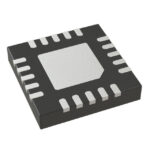 AD5676RACPZ-RL
The activity of extra discounts on wholesale prices is in full swing…
Please fill in your contact information and we will send you the latest wholesale price list.