ChipApex | Global Electronic Components Supplier
SEARCH
Search Product
Search Post
— IC芯片 | 连接器 | 传感器 | 被动器件 —
Search productSearch post
— IC芯片 | 连接器 | 传感器 | 被动器件 —
Consult the customer manager about the wholesale price.
consultation hotline:86-132-6715-2157
email:[email protected]
Contact the product manager for consultation. One-stop consultation is available.
Do you want a lower wholesale price? Please send us your inquiry and we will reply immediately.
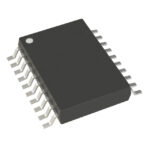
The AD5676RBRUZ-REEL7 is an octal, 16-bit buffered voltage output digital-to-analog converter (DAC) from Analog Devices. It features a high-performance architecture with a maximum integral nonlinearity (INL) of ±3 LSB and a total unadjusted error (TUE) of ±0.14% of full-scale range (FSR). The device integrates a low-drift 2.5 V internal reference with a typical temperature coefficient of 2 ppm/°C. Operating on a single 2.7 V to 5.5 V supply, it supports a user-selectable gain of 1 or 2, providing full-scale outputs of 2.5 V or 5 V respectively. Communication is handled via a versatile SPI interface capable of up to 50 MHz clock rates.
Verify the B grade specification for INL limits (±3 LSB max) against application requirements. Confirm that the reel packaging format aligns with automated assembly equipment specifications. Ensure the operating temperature range of −40°C to +125°C meets environmental constraints. Check for RoHS compliance documentation if required by regional regulations.
Select this component when eight independent 16-bit channels are required in a compact form factor. The integrated reference simplifies design by reducing external component count. Consider the 50 MHz SPI speed for high-throughput applications. Verify logic voltage compatibility (1.8 V to 5.5 V) with the host microcontroller. Evaluate thermal performance if operating near the upper temperature limit.
This part belongs to the nanoDAC+ family, which emphasizes high channel density and precision. The AD5676R variant specifically offers 16-bit resolution compared to the 12-bit AD5672R. The 'BRUZ' suffix indicates the B grade accuracy level and TSSOP-20 package. The '-REEL7' suffix denotes the tape and reel packaging configuration for surface-mount technology.
The AD5676ARUZ serves as a direct pin-compatible alternative with A grade specifications. For lower resolution needs, the AD5672R series provides 12-bit options within the same package. External reference designs may require the standard AD5676 without the internal reference integration.
 AD5676RBRUZ-REEL7
The activity of extra discounts on wholesale prices is in full swing…
Please fill in your contact information and we will send you the latest wholesale price list.