ChipApex | Global Electronic Components Supplier
SEARCH
Search Product
Search Post
— IC芯片 | 连接器 | 传感器 | 被动器件 —
Search productSearch post
— IC芯片 | 连接器 | 传感器 | 被动器件 —
Consult the customer manager about the wholesale price.
consultation hotline:86-132-6715-2157
email:[email protected]
Contact the product manager for consultation. One-stop consultation is available.
Do you want a lower wholesale price? Please send us your inquiry and we will reply immediately.
The AD5687RBCPZ-RL7 is a dual, 12-bit buffered voltage output digital-to-analog converter (DAC) from the nanoDAC+ family. It integrates a 2.5 V internal reference with a typical drift of 2 ppm/°C and operates on a single 2.7 V to 5.5 V supply. The device features an SPI interface supporting up to 50 MHz clock rates, user-selectable gain of 1 or 2 via the GAIN pin, and power-down modes reducing current to 4 μA at 3 V. It provides high drive capability of 20 mA, low glitch impulse of 0.5 nV-sec, and total unadjusted error (TUE) of ±0.1% FSR maximum. The component is housed in a compact 3 mm × 3 mm 16-lead LFCSP package.
Verify the specific suffix RL7 corresponds to the reel packaging format required for production integration. Confirm that the B grade accuracy specifications meet the design requirements for integral nonlinearity and offset errors. Ensure the LFCSP-16 thermal management strategy aligns with the specified junction temperature limits during operation.
Select this model when a dual-channel DAC with integrated precision reference is required. The AD5687R is suitable for applications needing 12-bit accuracy with low drift. Consider the GAIN pin configuration to determine if the 2.5 V or 5 V output span is necessary. Verify logic voltage compatibility with the VLOGIC pin range of 1.62 V to 5.5 V for the host microprocessor interface.
This component belongs to the AD5689R/AD5687R nanoDAC+ family, which shares identical pinouts and functional blocks but differs in resolution. The AD5689R offers 16-bit resolution, while the AD5687R provides 12-bit resolution. Both devices utilize the same 16-lead LFCSP and TSSOP packages and support similar SPI communication protocols and power-down features.
The AD5687RBCPZ can serve as a direct replacement for the AD5687BCPZ-RL7 if the external reference version is not required, provided the internal reference meets system drift specifications. Verify package compatibility and ensure the absence of the 'R' suffix does not alter the electrical characteristics relative to the original design intent.
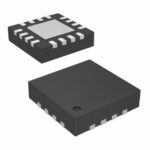 AD5687RBCPZ-RL7
The activity of extra discounts on wholesale prices is in full swing…
Please fill in your contact information and we will send you the latest wholesale price list.