ChipApex | Global Electronic Components Supplier

SEARCH
Search Product
Search Post
— IC芯片 | 连接器 | 传感器 | 被动器件 —
Search productSearch post
— IC芯片 | 连接器 | 传感器 | 被动器件 —
Consult the customer manager about the wholesale price.
consultation hotline:86-132-6715-2157
email:[email protected]
Contact the product manager for consultation. One-stop consultation is available.
Do you want a lower wholesale price? Please send us your inquiry and we will reply immediately.
The AD569BD is a monolithic 16-bit digital-to-analog converter manufactured using Analog Devices' BiMOS II process. It features a voltage-segmented architecture that guarantees 16-bit monotonicity over temperature and time. The device includes double-buffered input latches, selector switches, and on-chip high-speed buffer amplifiers. It supports both 8-bit and 16-bit bus interfaces via TTL/LSTTL/5V CMOS-compatible control signals (CS, LBE, HBE, LDAC). The AD569BD operates within an industrial temperature range of –25°C to +85°C and is housed in a 28-pin ceramic DIP package.
Verify the specific grade suffix BD indicates the industrial temperature range (-25°C to +85°C) and 28-pin ceramic DIP package. Confirm that the ordering part number matches the required linearity specifications, as other grades like JN or SD offer different performance and environmental ratings. Ensure ESD precautions are observed during handling due to the device's sensitivity.
Select the AD569BD when industrial temperature operation is required alongside high precision. The BD grade offers improved integral nonlinearity (±0.024%) compared to the AD grade (±0.04%). Consider the need for Kelvin reference connections to minimize gain errors caused by wiring resistances. Verify that the system power supplies can accommodate the ±10.8 V to ±13.2 V range specified for optimal reference voltage operation.
The AD569 series comprises several grades differentiated by temperature range and linearity accuracy. The AD569BD belongs to the industrial grade family, sharing the same core BiMOS II technology and 16-bit resolution as the commercial (J/K) and extended (SD) variants. All versions utilize the same 28-pin pinout but differ in packaging materials and operational limits.
Direct replacements must match the 16-bit resolution, 28-pin ceramic DIP package, and industrial temperature range. Verify compatibility with existing control logic levels (TTL/LSTTL/5V CMOS). Note that newer generations may require software or hardware adjustments due to differences in settling times or glitch impulse characteristics.
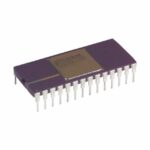 AD569BD

The activity of extra discounts on wholesale prices is in full swing…
Please fill in your contact information and we will send you the latest wholesale price list.