 ChipApex | Global Electronic Components Supplier

SEARCH
Search Product
Search Post
— IC芯片 | 连接器 | 传感器 | 被动器件 —
Search productSearch post
— IC芯片 | 连接器 | 传感器 | 被动器件 —
Consult the customer manager about the wholesale price.
consultation hotline:86-132-6715-2157
email:[email protected]
Contact the product manager for consultation. One-stop consultation is available.
Do you want a lower wholesale price? Please send us your inquiry and we will reply immediately.
The AD569KN is a monolithic 16-bit digital-to-analog converter manufactured using Analog Devices' BiMOS II process. It features a voltage-segmented architecture that guarantees monotonicity over temperature and time. The device includes double-buffered input latches, selector switches, decoding logic, and on-chip buffer amplifiers. It supports both 8-bit and 16-bit parallel data interfaces via CS, LBE, HBE, and LDAC control signals. The AD569KN operates within a commercial temperature range of 0°C to +70°C and is housed in a 28-pin plastic DIP package.
Verify the specific grade suffix 'KN' corresponds to the commercial temperature range (0°C to +70°C) and plastic DIP packaging. Confirm that the ordering information matches the manufacturer's current production status, as older BiMOS II components may have limited availability or require verification of MIL-STD-883 compliance if military-grade specifications are required.
Select the AD569KN when a 16-bit resolution with guaranteed monotonicity is required for commercial temperature environments. Ensure the system provides ±12 V power supplies (ranging from ±10.8 V to ±13.2 V) and an external reference voltage within the ±5 V range. Verify that the parallel interface timing requirements, such as minimum write pulse widths, align with the host microprocessor's capabilities.
The AD569KN belongs to the AD569 family of 16-bit DACs. Other variants include the AD569JN (commercial, higher INL), AD569AD/BD (industrial temperature range), and AD569SD (extended temperature range). The 'K' grade offers tighter linearity specifications than the 'J' grade, while the 'N' suffix denotes the 28-pin plastic DIP package.
Direct replacements within the same package and pinout include the AD569JN, though it has different linearity specifications. For industrial temperature ranges, the AD569BD is available in the same ceramic DIP package but differs in thermal performance. Cross-family replacements like the AD568x series require interface redesign due to serial communication differences.
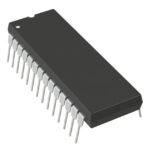 AD569KN

The activity of extra discounts on wholesale prices is in full swing…
Please fill in your contact information and we will send you the latest wholesale price list.





