ChipApex | Global Electronic Components Supplier

SEARCH
Search Product
Search Post
— IC芯片 | 连接器 | 传感器 | 被动器件 —
Search productSearch post
— IC芯片 | 连接器 | 传感器 | 被动器件 —
Consult the customer manager about the wholesale price.
consultation hotline:86-132-6715-2157
email:[email protected]
Contact the product manager for consultation. One-stop consultation is available.
Do you want a lower wholesale price? Please send us your inquiry and we will reply immediately.
The AD5734RBREZ-REEL7 is a quad, 14-bit serial input, voltage output digital-to-analog converter (DAC) from Analog Devices. It operates from single supplies of +4.5 V to +16.5 V or dual supplies of ±4.5 V to ±16.5 V. The device features software-programmable output ranges including +5 V, +10 V, +10.8 V, ±5 V, ±10 V, and ±10.8 V. Key electrical specifications include a maximum integral nonlinearity (INL) error of ±4 LSB, a differential nonlinearity (DNL) error of ±1 LSB, and a typical settling time of 10 µs. An integrated reference with a maximum temperature coefficient of ±5 ppm/°C is included.
Verify the REEL7 suffix indicates tape-and-reel packaging when sourcing components. Confirm that the specific revision matches the required datasheet version for accurate timing and electrical parameter validation. Ensure compatibility with the target serial interface standards before integration.
Select this component for applications requiring four independent 14-bit channels with high accuracy. Verify that the required output voltage range falls within the supported limits of ±10.8 V maximum. Ensure the system power supply can accommodate the specified AVDD and DVCC voltage ranges for optimal performance.
This part belongs to the AD5724R/AD5734R/AD5754R family, which shares identical pinouts and functional architectures across 12-bit, 14-bit, and 16-bit resolutions. The AD5734R specifically provides the 14-bit performance tier within this series, offering a balance between resolution and speed for precision analog output tasks.
The AD5734BRUZ is a pin-compatible alternative in the same family. Verify that the package type (TSSOP vs. TSSOP-EP) and thermal requirements are compatible with the existing PCB layout before substitution.
The input coding is user-selectable as two's complement or offset binary for bipolar output ranges, depending on the state of the BIN/2sCOMP pin. Straight binary is used for unipolar outputs.
Double buffering allows for the simultaneous updating of all DAC outputs. This is achieved by holding the LDAC pin high during the write cycle and asserting it low to update all analog outputs at once.
The asynchronous CLR pin clears all DAC registers to a user-selectable zero-scale or mid-scale output when asserted low.
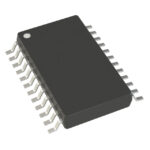 AD5734RBREZ-REEL7

The activity of extra discounts on wholesale prices is in full swing…
Please fill in your contact information and we will send you the latest wholesale price list.