 ChipApex | Global Electronic Components Supplier

SEARCH
Search Product
Search Post
— IC芯片 | 连接器 | 传感器 | 被动器件 —
Search productSearch post
— IC芯片 | 连接器 | 传感器 | 被动器件 —
Consult the customer manager about the wholesale price.
consultation hotline:86-132-6715-2157
email:[email protected]
Contact the product manager for consultation. One-stop consultation is available.
Do you want a lower wholesale price? Please send us your inquiry and we will reply immediately.
The AD5758BCPZ is a single-channel, 16-bit digital-to-analog converter (DAC) featuring both current and voltage outputs on a shared terminal. It operates with supply rails from -33 V to +33 V, supporting a maximum differential voltage of 60 V. The device integrates dynamic power control (DPC) via an internal buck DC-DC converter to minimize thermal dissipation. Key specifications include a total unadjusted error (TUE) of ±0.05% FSR for voltage output and ±0.06% FSR for current output. It supports HART connectivity through the CHART pin and includes a 12-bit diagnostic ADC. The component utilizes a 4-wire SPI interface operating up to 50 MHz and is housed in a 32-lead LFCSP package.
Verify the specific suffix 'RL7' against the manufacturer's ordering guide to confirm reel packaging quantities and tape specifications. Ensure the selected variant matches the required temperature range and calibration status. Cross-reference the datasheet revision history for any updates to companion products or electrical parameters prior to finalizing procurement.
Select this component for applications requiring combined voltage and current signaling on a single wire. Evaluate the DPC mode requirements; if external inductors are undesirable, consider the PPC mode limitations. Verify that the system logic levels align with the 1.71 V to 5.5 V VLOGIC input range. Confirm that the load impedance does not exceed the specified headroom and footroom constraints for the chosen output range.
The AD5758 belongs to the Analog Devices AD575x family of precision DACs. It serves as a successor to earlier models like the AD5755-1, offering enhanced diagnostic capabilities and improved EMC performance. It is often paired with the ADP1031 power management unit to create fully isolated multi-channel output modules while maintaining low power consumption.
Direct replacements within the same family include the AD5755-1, though it lacks some diagnostic features. For higher channel counts, the AD5766 or AD5767 series may be considered, but they differ in architecture and pinout. Verify compatibility with existing PCB layouts and software drivers when substituting.
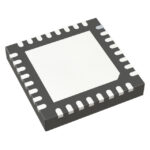 AD5758BCPZ

The activity of extra discounts on wholesale prices is in full swing…
Please fill in your contact information and we will send you the latest wholesale price list.





