ChipApex | Global Electronic Components Supplier

SEARCH
Search Product
Search Post
— IC芯片 | 连接器 | 传感器 | 被动器件 —
Search productSearch post
— IC芯片 | 连接器 | 传感器 | 被动器件 —
Consult the customer manager about the wholesale price.
consultation hotline:86-132-6715-2157
email:[email protected]
Contact the product manager for consultation. One-stop consultation is available.
Do you want a lower wholesale price? Please send us your inquiry and we will reply immediately.
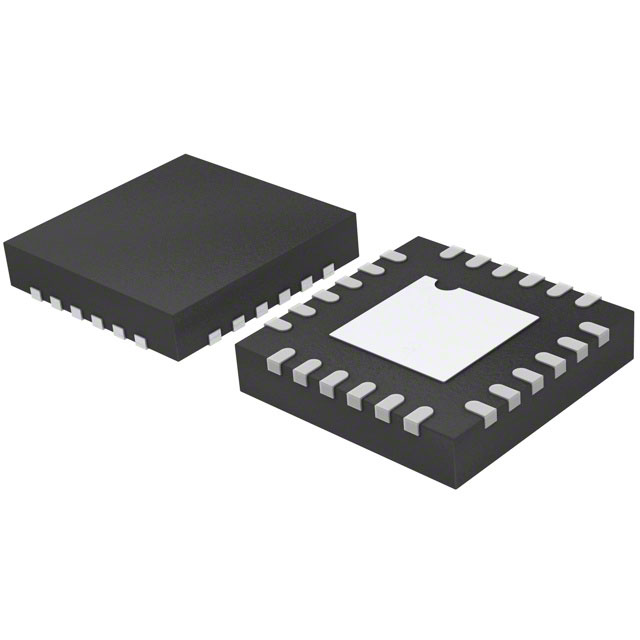
The AD5790BCPZ-RL7 is a single-channel, 20-bit unbuffered voltage output digital-to-analog converter (DAC) from Analog Devices. It operates on a bipolar supply up to ±16.5 V and features integrated precision reference buffers. Key electrical specifications include a maximum integral nonlinearity (INL) of ±2 LSB, an output noise spectral density of 8 nV/√Hz, and a gain error temperature coefficient of ±0.018 ppm/°C. The device supports a 35 MHz Schmitt-triggered serial interface compatible with SPI, QSPI, MICROWIRE, and DSP standards. It is housed in a 4 mm × 5 mm LFCSP package and functions within a temperature range of −40°C to +125°C.
Verify the specific B version grade against design requirements, as it defines the INL and DNL tolerances. Confirm that the LFCSP-24 package footprint matches the PCB layout. Ensure the external reference voltage falls within the specified input ranges relative to the analog supply rails. Check for moisture sensitivity handling requirements during assembly.
Select this component when high absolute accuracy and long-term stability are critical. The integrated reference buffers simplify design by reducing board space compared to discrete solutions. Verify that the 3-wire serial interface timing meets the host controller's clock speed capabilities. Consider the DC output impedance of 3.4 kΩ for load driving limitations without an external buffer.
The AD5790 belongs to the AD5790 family of system-ready DACs. Related devices include the AD5791 (20-bit, 1 LSB accurate), AD5780 (18-bit, buffered references), and AD5760 (16-bit). These parts share similar interface protocols and architectural features but differ in resolution and linearity specifications.
Direct functional substitutes within the same package and pinout are not explicitly listed as drop-in replacements in the provided documentation. The AD5791 offers higher accuracy (1 LSB) but may require verification of interface compatibility. The AD5780 provides 18-bit resolution with buffered references.
 AD5790BCPZ-RL7

The activity of extra discounts on wholesale prices is in full swing…
Please fill in your contact information and we will send you the latest wholesale price list.