 ChipApex | Global Electronic Components Supplier
SEARCH
Search Product
Search Post
— IC芯片 | 连接器 | 传感器 | 被动器件 —
Search productSearch post
— IC芯片 | 连接器 | 传感器 | 被动器件 —
Consult the customer manager about the wholesale price.
consultation hotline:86-132-6715-2157
email:[email protected]
Contact the product manager for consultation. One-stop consultation is available.
Do you want a lower wholesale price? Please send us your inquiry and we will reply immediately.
The AD5930YRUZ-REEL7 is a programmable frequency sweep and output burst waveform generator from Analog Devices. It utilizes embedded digital processing to generate synthesized analog or digital frequency-stepped waveforms, eliminating the need for continuous DSP/microcontroller write cycles. The device supports sinusoidal, triangular, and square wave outputs with frequencies up to 25 MHz. It features a 10-bit DAC with an update rate of 50 MSPS and operates on a power supply ranging from 2.3 V to 5.5 V. Key specifications include a typical current consumption of 6.7 mA, a power-down mode drawing 20 µA, and an automotive temperature range of −40°C to +125°C. Communication is handled via a 3-wire serial interface operating at clock rates up to 40 MHz.
Verify the specific ordering suffix REEL7 confirms tape and reel packaging when sourcing. Confirm the Y grade designation matches the required automotive temperature range of −40°C to +125°C for your application environment. Ensure the 20-lead TSSOP package dimensions align with your PCB layout constraints. Cross-reference the latest datasheet revision D for any updates to electrical characteristics or pin configurations before finalizing procurement.
Select this component when a standalone waveform generator with preprogrammable sweep capabilities is required to reduce microcontroller load. Consider the 25 MHz maximum output frequency and 10-bit DAC resolution against your signal fidelity needs. Evaluate the 2.3 V to 5.5 V supply range compatibility with your system voltage rails. The automotive temperature rating makes it suitable for harsh environments where standard commercial grades may fail.
The AD5930 series serves as a dedicated solution for generating precise frequency sweeps and bursts in embedded systems. It integrates a 24-bit pipelined DDS core and a 10-bit DAC, allowing for complex waveform generation without extensive external circuitry. This integration simplifies design by handling frequency stepping and phase continuity internally, freeing up host resources for other tasks.
Check for direct cross-references within the Analog Devices portfolio. Verify that alternative devices support similar 3-wire serial interfaces and comparable output frequency ranges. Ensure replacement parts maintain the same package footprint and voltage specifications to avoid board redesign.
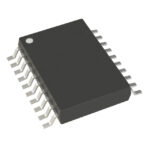 AD5930YRUZ-REEL7
The activity of extra discounts on wholesale prices is in full swing…
Please fill in your contact information and we will send you the latest wholesale price list.





