 ChipApex | Global Electronic Components Supplier
SEARCH
Search Product
Search Post
— IC芯片 | 连接器 | 传感器 | 被动器件 —
Search productSearch post
— IC芯片 | 连接器 | 传感器 | 被动器件 —
Consult the customer manager about the wholesale price.
consultation hotline:86-132-6715-2157
email:[email protected]
Contact the product manager for consultation. One-stop consultation is available.
Do you want a lower wholesale price? Please send us your inquiry and we will reply immediately.
The AD630ARZ-RL is a high-precision balanced modulator and demodulator manufactured by Analog Devices Inc. It utilizes a flexible commutator architecture supported by laser-wafer-trimmed thin-film resistors to ensure high accuracy and temperature stability. The device features two independent differential input stages paired with a precision comparator, enabling low switch distortion through fast response and high slew rate linear amplification. Designed for signal processing in instruments, it can extract weak signals from noise with a dynamic range of 100 dB. The component operates within a frequency range of 0 Hz to 2 MHz, powered by a supply voltage between 5 V and 16.5 V, consuming 5 mA of current.
Verify the specific suffix RL indicates reel packaging when sourcing. Confirm RoHS compliance status as some variants may differ. Check lead times due to potential limited availability. Ensure the SOIC-20 package matches the PCB footprint requirements. Validate operating temperature range specifications against environmental constraints before finalizing procurement.
Select this component for applications requiring precise amplitude modulation or synchronous detection. The integrated gain options simplify circuit design by reducing external passive components. Consider the 2 MHz maximum frequency limit for high-speed signal processing needs. Evaluate the 100 dB dynamic range capability for extracting signals buried in significant noise floors. Ensure power supply voltages remain within the specified 5 V to 16.5 V operational window.
The AD630 series represents Analog Devices' solution for precision analog multiplication and demodulation. The ARZ-RL variant specifically denotes the surface-mount SOIC-20 package configuration supplied in a reel format. This part belongs to the broader family of specialized analog signal processing integrated circuits designed for laboratory and industrial measurement equipment.
Direct pin-compatible substitutes are not explicitly documented in the provided source material. Designers should evaluate generic balanced modulators only if they match the specific commutator architecture and laser-trimmed resistor precision characteristics required for the application.
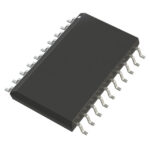 AD630ARZ-RL
The activity of extra discounts on wholesale prices is in full swing…
Please fill in your contact information and we will send you the latest wholesale price list.





