 ChipApex | Global Electronic Components Supplier
SEARCH
Search Product
Search Post
— IC芯片 | 连接器 | 传感器 | 被动器件 —
Search productSearch post
— IC芯片 | 连接器 | 传感器 | 被动器件 —
Consult the customer manager about the wholesale price.
consultation hotline:86-132-6715-2157
email:[email protected]
Contact the product manager for consultation. One-stop consultation is available.
Do you want a lower wholesale price? Please send us your inquiry and we will reply immediately.
The AD652SQ is a monolithic synchronous voltage-to-frequency converter (SVFC) manufactured by Analog Devices Inc. It operates over an extended temperature range of −55°C to +125°C and utilizes a charge-balancing technique with an external clock to define full-scale output frequency, reaching up to 2 MHz. The device features extremely low linearity error, typically 0.002% at 100 kHz output, and includes an accurate buffered 5 V reference. It supports dual or single-supply operation and accepts voltage or current inputs.
Verify the specific SQ grade designation confirms the extended temperature rating of −55°C to +125°C. Ensure the package type matches the required 16-lead CERDIP form factor. Confirm that the application environment does not exceed the absolute maximum ratings for supply voltage or input signals. Check for MIL-STD-883 compliance requirements if the design mandates military-grade specifications.
Select the AD652SQ when extended temperature performance is critical compared to commercial grades. Consider the device for applications requiring minimal external components due to the integrated reference and scaling resistors. Evaluate the need for synchronous operation to simplify multi-channel system timing. Verify that the available clock frequency supports the desired output resolution and conversion speed.
The AD652 series comprises synchronous voltage-to-frequency converters available in multiple performance grades. The SQ grade specifically denotes the version rated for the full −55°C to +125°C extended temperature range. It shares the core SVFC architecture with JP, KP, AQ, and BQ grades but offers broader environmental tolerance suitable for harsh industrial or aerospace conditions.
No direct public substitute part numbers are documented for this component.
It uses an external clock to define the full-scale frequency rather than relying on the stability of an external capacitor, resulting in a more stable and linear transfer function.
The full-scale frequency can be set by an external system clock up to a maximum of 2 MHz.
Yes, the analog and digital sections are designed to allow operation from a single-ended power source, simplifying use with isolated supplies.
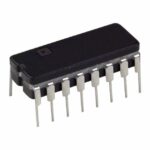 AD652SQ
The activity of extra discounts on wholesale prices is in full swing…
Please fill in your contact information and we will send you the latest wholesale price list.





