 ChipApex | Global Electronic Components Supplier

SEARCH
Search Product
Search Post
— IC芯片 | 连接器 | 传感器 | 被动器件 —
Search productSearch post
— IC芯片 | 连接器 | 传感器 | 被动器件 —
Consult the customer manager about the wholesale price.
consultation hotline:86-132-6715-2157
email:[email protected]
Contact the product manager for consultation. One-stop consultation is available.
Do you want a lower wholesale price? Please send us your inquiry and we will reply immediately.
The AD660ANZ is a monolithic 16-bit digital-to-analog converter manufactured by Analog Devices Inc. in a 24-lead plastic DIP package. It integrates an on-chip buried Zener voltage reference, double-buffered latches, and an output amplifier. The device supports serial or byte input interfaces and offers pin-programmable unipolar (0 V to 10 V) or bipolar (−10 V to +10 V) output ranges. Key electrical specifications include ±1 LSB integral nonlinearity, 15-bit monotonicity over temperature, and a typical output settling time of 8 μs for a full-scale step.
Verify the specific suffix 'AN' corresponds to the 24-lead plastic DIP package and the −40°C to +85°C operating temperature range. Confirm RoHS compliance status as required by project specifications. Ensure supply voltages match the specified +VCC (+13.5 V to +16.5 V), −VEE (−13.5 V to −16.5 V), and +VLL (+4.5 V to +5.5 V) requirements for proper operation.
Select the AD660ANZ when a complete 16-bit solution with an internal reference is required to minimize external component count. Choose this part for applications needing pin-programmable output spans without external resistors. Consider the double-buffered latch structure if simultaneous updating of multiple channels is necessary. Verify that the SPI or Microwire interface timing meets the microprocessor system constraints.
The AD660 belongs to the DACPORT family of monolithic data converters. The AN grade specifically denotes the plastic DIP variant rated for commercial/industrial temperatures. Other variants include the AR (SOIC), BN/BR (improved linearity grades), and SQ (ceramic/military). This component represents a legacy high-precision BiMOS II technology design offering robust performance in demanding analog environments.
Direct pin-compatible replacements are limited due to the specific integration level. Review the AD660BN for improved linearity specifications within the same package. For modern alternatives, consider higher-speed or lower-power DACs from the manufacturer, though architectural differences may require schematic redesign.
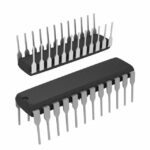 AD660AN

The activity of extra discounts on wholesale prices is in full swing…
Please fill in your contact information and we will send you the latest wholesale price list.






