 ChipApex | Global Electronic Components Supplier
SEARCH
Search Product
Search Post
— IC芯片 | 连接器 | 传感器 | 被动器件 —
Search productSearch post
— IC芯片 | 连接器 | 传感器 | 被动器件 —
Consult the customer manager about the wholesale price.
consultation hotline:86-132-6715-2157
email:[email protected]
Contact the product manager for consultation. One-stop consultation is available.
Do you want a lower wholesale price? Please send us your inquiry and we will reply immediately.
The AD6655ABCPZ-125 is a mixed-signal intermediate frequency receiver manufactured by Analog Devices Inc. It integrates dual 14-bit analog-to-digital converters and a broadband digital downconverter within a single package. The device supports sample rates up to 125 MSPS, accommodating IF frequencies from 0 Hz to 450 MHz. It operates on supply voltages ranging from 1.7 V to 1.9 V for the core logic and 3.6 V maximum for I/O. The component is housed in a 64-pin LFCSP-VQ (9x9 mm) package, designed for compact wireless infrastructure applications requiring high linearity and low power consumption.
Verify component authenticity through authorized Analog Devices distributors or certified partners. Confirm RoHS compliance status via official documentation prior to integration. Ensure storage conditions meet humidity sensitivity requirements specified in the datasheet. Validate pinout compatibility with target PCB layout using the provided footprint data. Request lot traceability information to maintain quality assurance standards during procurement.
Select this model when designing systems requiring simultaneous dual-channel signal processing at 125 MSPS. Consider the 14-bit resolution for applications demanding high dynamic range in IF stages. Evaluate the 0 Hz to 450 MHz input range against specific carrier frequencies. Assess thermal performance within the -40°C to +85°C operating window. Compare power consumption metrics against alternative receivers to optimize system efficiency.
The AD6655 series represents Analog Devices' solution for compact wireless infrastructure. This specific variant targets multi-standard base stations where space and power are critical constraints. It replaces discrete ADC and DDC implementations, reducing bill of materials complexity. The family includes variants supporting different sample rates, with the -125 suffix denoting the 125 MSPS capability.
Consult official Analog Devices substitution guides for verified alternatives. Cross-reference pinouts and electrical specifications before considering any substitute part numbers.
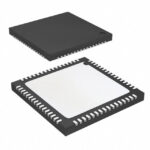 AD6655ABCPZ-125
The activity of extra discounts on wholesale prices is in full swing…
Please fill in your contact information and we will send you the latest wholesale price list.





