 ChipApex | Global Electronic Components Supplier
SEARCH
Search Product
Search Post
— IC芯片 | 连接器 | 传感器 | 被动器件 —
Search productSearch post
— IC芯片 | 连接器 | 传感器 | 被动器件 —
Consult the customer manager about the wholesale price.
consultation hotline:86-132-6715-2157
email:[email protected]
Contact the product manager for consultation. One-stop consultation is available.
Do you want a lower wholesale price? Please send us your inquiry and we will reply immediately.
The AD693AQ is a monolithic signal conditioning circuit designed for two-wire, loop-powered sensor transmitters. It accepts low-level inputs from transducers and controls a standard 4–20 mA current loop. The device features an instrumentation amplifier front end with precalibrated 30 mV or 60 mV input spans. It provides a 6.2 V reference with up to 3.5 mA excitation current. Total unadjusted error is less than 0.5% at +25 °C and 0.75% over the industrial temperature range. It operates on a supply voltage of 12 V to 36 V with a quiescent current of 500 µA. The component is housed in a 20-pin Cerdip package.
Verify the specific suffix AQ corresponds to the 20-pin Cerdip package configuration required for your assembly process. Confirm that the industrial temperature range of -40°C to +85°C meets your operational environment specifications. Ensure compatibility with existing PCB footprints for ceramic side-brazed DIP packages during procurement planning.
Select this component when a complete, low-cost solution for converting low-level sensor signals to a 4-20 mA loop is required. It is suitable for replacing discrete designs in process control and factory automation. Consider the external pass transistor option if minimizing self-heating errors is critical for your application's thermal performance requirements.
The AD693 series includes variants such as the AD693AD (Ceramic Side-Brazed DIP) and AD693AE (Leadless Ceramic Chip Carrier). The AD693AQ specifically denotes the Cerdip package version. All variants share identical electrical characteristics and functional block diagrams, differing only in physical packaging and mounting style.
No direct public substitute part numbers are confirmed in the provided documentation. Discrete designs previously used may be replaced by this integrated circuit to reduce component count and calibration complexity.
Input span is adjusted by changing the gain of the Signal Amplifier using pin strapping for 30 mV or 60 mV spans, or by adding external resistors to modify attenuation for other ranges.
The auxiliary amplifier can be used for transducer excitation, buffering, amplifying signals, or configuring dynamic bridge arrangements such as RTD signal conditioners.
Yes, the AD693 supports local-powered, three-wire applications, which allows for 0–20 mA output operation and improved voltage compliance at the I_IN terminal.
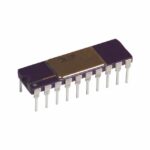 AD693AQ
The activity of extra discounts on wholesale prices is in full swing…
Please fill in your contact information and we will send you the latest wholesale price list.





