 ChipApex | Global Electronic Components Supplier
SEARCH
Search Product
Search Post
— IC芯片 | 连接器 | 传感器 | 被动器件 —
Search productSearch post
— IC芯片 | 连接器 | 传感器 | 被动器件 —
Consult the customer manager about the wholesale price.
consultation hotline:86-132-6715-2157
email:[email protected]
Contact the product manager for consultation. One-stop consultation is available.
Do you want a lower wholesale price? Please send us your inquiry and we will reply immediately.
The AD694BQ is a monolithic current transmitter designed to drive standard 4–20 mA loops for process control. It accepts high-level voltage inputs and provides precision output ranges of 4–20 mA or 0–20 mA. The device features precalibrated input spans selectable via pin strapping, including 0 V to 2 V and 0 V to 10 V. It operates on a wide power supply range from 4.5 V to 36 V with single or dual supply configurations. The BQ variant specifies performance over the –40°C to +85°C industrial temperature range in a hermetically sealed 16-pin CERDIP package.
Verify the specific suffix 'BQ' corresponds to the industrial temperature grade (-40°C to +85°C) and the 16-pin CERDIP package when sourcing. Confirm that the ordering information matches the manufacturer's current datasheet revision, as availability and packaging options may vary by region and production cycle. Ensure compatibility with existing board layouts requiring hermetic sealing.
Select the AD694BQ for applications requiring industrial temperature stability and hermetic packaging. Choose this model over plastic variants if radiation hardness or long-term reliability in harsh environments is critical. Ensure the supply voltage meets the minimum requirements for the selected reference configuration (e.g., 12.5 V for 10 V reference). Consider external pass transistors if power dissipation exceeds internal limits at high supply voltages.
The AD694 series serves as a complete solution for converting analog signals into standardized 4–20 mA currents. The BQ designation specifically identifies the version optimized for extended industrial temperature ranges and packaged in a ceramic dual in-line format. This component replaces discrete designs in control loops, offering high accuracy and reduced calibration needs through active laser trimming of internal thin-film resistors.
Direct replacements include other AD694 variants such as the AD694AQ (also industrial temp, CERDIP) or AD694BR (industrial temp, SOIC), depending on package constraints. Verify that substitute components maintain the same 16-pin footprint and electrical specifications for compliance and offset accuracy.
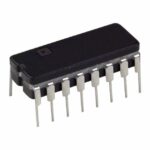 AD694BQ
The activity of extra discounts on wholesale prices is in full swing…
Please fill in your contact information and we will send you the latest wholesale price list.





