 ChipApex | Global Electronic Components Supplier
SEARCH
Search Product
Search Post
— IC芯片 | 连接器 | 传感器 | 被动器件 —
Search productSearch post
— IC芯片 | 连接器 | 传感器 | 被动器件 —
Consult the customer manager about the wholesale price.
consultation hotline:86-132-6715-2157
email:[email protected]
Contact the product manager for consultation. One-stop consultation is available.
Do you want a lower wholesale price? Please send us your inquiry and we will reply immediately.
The AD694BRZ is a current transmitter integrated circuit manufactured by Analog Devices Inc., designed for industrial process control applications. It accepts voltage inputs and generates standard 4-20 mA loop currents with high accuracy. The device operates on a single supply voltage ranging from 4.5 V to 36 V, consuming a typical quiescent current of 1.5 mA. Key electrical specifications include an input offset voltage of 50 µV, an input bias current of 5 nA, and a common-mode rejection ratio of 80 dB. It features a gain-bandwidth product of 300 kHz and supports output currents up to 20 mA per channel. The component is housed in a 16-SOIC surface-mount package and functions reliably within an operating temperature range of -40°C to +85°C.
Verify the specific suffix (e.g., BRZ) against the latest manufacturer datasheet to confirm package type and temperature grade. Confirm RoHS compliance status as regulatory requirements may evolve. Check for obsolescence notices or lifecycle changes directly from Analog Devices, as availability can vary significantly across distributors. Ensure the ordering quantity matches the required packaging format, such as tube or reel, if applicable.
Select this component when a combined instrumentation amplifier and current loop driver is needed to minimize board space and component count. Consider the 16-SOIC package constraints for PCB layout and thermal management. Evaluate the 4.5 V to 36 V supply range compatibility with existing system power rails. Verify that the 80 dB CMRR meets the noise immunity requirements of the specific application environment.
The AD694 belongs to Analog Devices' family of precision current transmitters, widely used in industrial automation. The 'B' grade indicates tighter performance specifications compared to lower grades, while 'RZ' denotes the RoHS-compliant 16-SOIC package. This part serves as a direct interface between sensitive analog sensors and standard industrial control loops, simplifying design complexity.
Publicly confirmed substitute part numbers are not available in the provided documentation. Engineers should consult the official Analog Devices replacement guide or contact technical support for qualified alternatives.
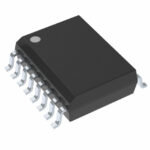 AD694BRZ
The activity of extra discounts on wholesale prices is in full swing…
Please fill in your contact information and we will send you the latest wholesale price list.





