 ChipApex | Global Electronic Components Supplier
SEARCH
Search Product
Search Post
— IC芯片 | 连接器 | 传感器 | 被动器件 —
Search productSearch post
— IC芯片 | 连接器 | 传感器 | 被动器件 —
Consult the customer manager about the wholesale price.
consultation hotline:86-132-6715-2157
email:[email protected]
Contact the product manager for consultation. One-stop consultation is available.
Do you want a lower wholesale price? Please send us your inquiry and we will reply immediately.
The AD698APZ is a monolithic Universal LVDT Signal Conditioner designed to convert mechanical position into unipolar or bipolar DC voltage with high accuracy. It integrates an internal low-distortion sine wave oscillator and voltage reference, eliminating the need for external adjustments. The device utilizes a ratiometric architecture to divide secondary amplitude by primary amplitude, ensuring stability against drive drift. It supports half-bridge, 4-wire LVDTs, and RVDTs within a 20 Hz to 20 kHz frequency range. Key electrical parameters include 0.05% linearity, ±11 V output voltage, 20 ppm/°C typical gain drift, and 5 ppm/°C typical offset drift.
Verify the specific suffix APZ indicates the commercial temperature grade (-40°C to +85°C) and PLCC package variant. Confirm that the ordering part number matches the required performance grade and package style for your design. Check current availability status as component lifecycles may change. Ensure compatibility with your PCB footprint for the 28-pin PLCC package before finalizing procurement orders.
Select the AD698APZ when a complete LVDT signal conditioning subsystem is required without external calibration. This part is suitable for designs needing ratiometric stability and support for various LVDT wiring configurations. Consider the -40°C to +85°C operating range and PLCC package constraints. Verify that the 20 Hz to 20 kHz excitation frequency range meets your sensor's operational requirements.
The AD698APZ belongs to the Analog Devices AD698 family of universal LVDT signal conditioners. It serves as a direct replacement for older discrete LVDT interface circuits, offering higher integration and improved temperature stability. The APZ designation specifically denotes the commercial grade version housed in a 28-lead PLCC package, distinct from other grades like SQ which offer extended temperature ranges.
The AD598 is a legacy LVDT signal conditioner from Analog Devices but lacks the integrated oscillator and ratiometric features of the AD698. Direct pin-to-pin substitution is not guaranteed; circuit redesign is likely required. No other public confirmed substitute part numbers are identified in the provided documentation.
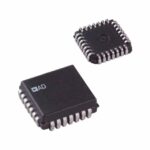 AD698APZ
The activity of extra discounts on wholesale prices is in full swing…
Please fill in your contact information and we will send you the latest wholesale price list.





