 ChipApex | Global Electronic Components Supplier
SEARCH
Search Product
Search Post
— IC芯片 | 连接器 | 传感器 | 被动器件 —
Search productSearch post
— IC芯片 | 连接器 | 传感器 | 被动器件 —
Consult the customer manager about the wholesale price.
consultation hotline:86-132-6715-2157
email:[email protected]
Contact the product manager for consultation. One-stop consultation is available.
Do you want a lower wholesale price? Please send us your inquiry and we will reply immediately.
The AD698SQ is a monolithic Universal LVDT Signal Conditioner designed to convert mechanical position into a unipolar or bipolar DC voltage. It integrates an internal oscillator and voltage reference, eliminating the need for external adjustments. The device supports excitation frequencies from 20 Hz to 20 kHz and provides an output voltage range of ±11 V. Key performance specifications include a linearity of 0.05%, gain drift of 20 ppm/°C (typ), and offset drift of 5 ppm/°C (typ). It operates within a temperature range of –55°C to +125°C and interfaces with half-bridge, 4-wire LVDTs, and RVDTs.
Verify the specific suffix SQ against the manufacturer's current ordering guide to confirm the –55°C to +125°C operating temperature range and package type. Ensure the procurement source is an authorized distributor to guarantee component authenticity and traceability. Cross-reference the revision level with the latest datasheet to confirm pinout compatibility and specification updates before finalizing orders.
Select the AD698SQ when operation in extreme environments below –40°C is required, as it covers the –55°C to +125°C range unlike the ACPZ grade. Confirm that the application utilizes LVDTs compatible with the 20 Hz to 20 kHz excitation frequency range. Evaluate the system bandwidth requirements to select appropriate external filter capacitors, noting that smaller capacitance increases bandwidth but may raise output ripple levels.
The AD698 serves as a complete subsystem solution for LVDT signal conditioning, replacing complex discrete designs. It simplifies integration by combining oscillation, demodulation, and amplification on a single chip. The SQ variant specifically targets rugged applications requiring extended temperature stability compared to commercial grades.
Public confirmed substitute part numbers are not available in the provided documentation. Verify compatibility with legacy AD598 designs, noting architectural differences such as the elimination of the requirement for constant secondary voltage sums.
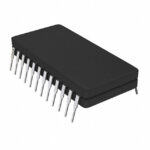 AD698SQ
The activity of extra discounts on wholesale prices is in full swing…
Please fill in your contact information and we will send you the latest wholesale price list.





