 ChipApex | Global Electronic Components Supplier

SEARCH
Search Product
Search Post
— IC芯片 | 连接器 | 传感器 | 被动器件 —
Search productSearch post
— IC芯片 | 连接器 | 传感器 | 被动器件 —
Consult the customer manager about the wholesale price.
consultation hotline:86-132-6715-2157
email:[email protected]
Contact the product manager for consultation. One-stop consultation is available.
Do you want a lower wholesale price? Please send us your inquiry and we will reply immediately.
The AD7111ACR is a monolithic logarithmic multiplying D/A converter fabricated in LC2MOS technology. It attenuates an analog input signal over a range of 0 dB to 88.5 dB with a nominal resolution of 0.375 dB. The device utilizes an onboard 8-bit buffer and decode logic to generate a 17-bit word for a 17-bit R-2R ladder. It operates on a single +5 V supply, features on-chip data latches, and accepts standard parallel digital inputs. The component is housed in a 16-pin SOIC package.
Verify the specific grade (AC) against the required temperature range (-40°C to +85°C) and accuracy specifications (0 dB to 72 dB guaranteed range). Confirm the SOIC package option matches the design footprint. Ensure ESD precautions are observed during handling due to the sensitivity of the CMOS structure.
Select the AD7111ACR when a wide dynamic range with fine step resolution is required in a compact surface-mount package. Compare performance against the AD7111A pin-compatible alternative if transparent latch operation via level-triggered WR is needed instead of edge-triggered loading. Consider output amplifier selection carefully to manage phase lag and offset errors.
The AD7111/AD7111A series represents Analog Devices' LOGDAC family of logarithmic converters. These devices combine precision bipolar circuits with low-power CMOS logic. The AC grade specifically denotes industrial temperature performance within this product line, offering enhanced accuracy ranges compared to commercial grades.
The AD7111A is pin and function compatible with the industry-standard AD7524, allowing for upgrades from existing designs. Other AD7111 variants such as AD7111ABR or AD7111KNZ may serve as alternatives depending on package preference or temperature requirements.
The device is designed to minimize glitches resulting from digital feedthrough through its proprietary LC2MOS process. Typical glitch impulse is specified at 10 nV-sec.
A minimum refresh time (tRFSH) of 3 µs is required for data to propagate through the decoder before a new data write can be attempted.
The device is monotonic if the analog output decreases or remains constant as the digital code increases. Monotonicity ranges depend on the selected attenuation step size and temperature grade.
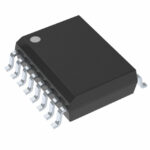 AD7111ACR

The activity of extra discounts on wholesale prices is in full swing…
Please fill in your contact information and we will send you the latest wholesale price list.





