 ChipApex | Global Electronic Components Supplier

SEARCH
Search Product
Search Post
— IC芯片 | 连接器 | 传感器 | 被动器件 —
Search productSearch post
— IC芯片 | 连接器 | 传感器 | 被动器件 —
Consult the customer manager about the wholesale price.
consultation hotline:86-132-6715-2157
email:[email protected]
Contact the product manager for consultation. One-stop consultation is available.
Do you want a lower wholesale price? Please send us your inquiry and we will reply immediately.
The AD7226KRZ-REEL is a quad 8-bit digital-to-analog converter (DAC) fabricated in LC2MOS process. It integrates four voltage-output DACs with buffer amplifiers and interface logic on a single chip. The device features separate on-chip latches for each channel, controlled via a common 8-bit TTL/CMOS compatible input port using address lines A0, A1, and write signal WR. Static performance includes ±0.5 LSB relative accuracy and ±1 LSB differential nonlinearity under dual supply conditions (VDD = 11.4 V to 16.5 V, VSS = –5 V). Dynamic settling time is 4 µs max. The K-version operates from –40°C to +85°C. This specific part number denotes the SOIC-20 package variant supplied in reel packaging.
Verify that the 'KRZ' suffix corresponds to the SOIC-20 package and REEL tape-and-reel packaging configuration as specified by Analog Devices. Confirm RoHS compliance status for the specific manufacturing lot. Ensure the receiving facility handles ESD-sensitive components appropriately during unpacking and assembly.
Select this component when four synchronized 8-bit voltage outputs are required in a compact form factor. The SOIC-20 package is suitable for surface-mount applications where board space is limited compared to DIP packages. Verify that the system power supply architecture supports the required VDD range of 11.4 V to 16.5 V and that the reference voltage remains within 2 V to (VDD – 4 V).
The AD7226 series belongs to Analog Devices' family of high-speed CMOS D/A converters. The 'K' designation indicates the industrial temperature range (-40°C to +85°C). The 'RZ' suffix typically identifies the SOIC-20 plastic small outline package with lead-free solder plating compliant with EU directives. The 'REEL' designation confirms bulk tape-and-reel shipping format for automated placement.
Direct pin-compatible replacements include other variants of the AD7226 family such as AD7226KNZ (DIP-20) or AD7226SJZ (PLCC-20), provided the package footprint matches the PCB design. Cross-package substitution requires schematic review for pinout differences between DIP, SOIC, SSOP, and PLCC configurations.
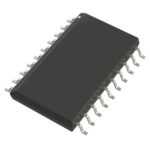 AD7226KRZ-REEL

The activity of extra discounts on wholesale prices is in full swing…
Please fill in your contact information and we will send you the latest wholesale price list.






