 ChipApex | Global Electronic Components Supplier

SEARCH
Search Product
Search Post
— IC芯片 | 连接器 | 传感器 | 被动器件 —
Search productSearch post
— IC芯片 | 连接器 | 传感器 | 被动器件 —
Consult the customer manager about the wholesale price.
consultation hotline:86-132-6715-2157
email:[email protected]
Contact the product manager for consultation. One-stop consultation is available.
Do you want a lower wholesale price? Please send us your inquiry and we will reply immediately.
The AD7228ABRZ is an octal 8-bit voltage-mode digital-to-analog converter (DAC) fabricated on LC2MOS CMOS technology. It integrates eight DACs with output buffer amplifiers and interface logic in a single chip, eliminating the need for external trims. The device features individual latches for each channel, controlled via a common 8-bit parallel data bus and address inputs (A0-A2). It supports dual supplies (VDD: 10.8 V to 16.5 V; VSS: -5 V ± 10%) or single supply operation (VDD: 13.5 V to 16.5 V). Key performance metrics include a settling time of 5 µs for positive full-scale changes and 7 µs for negative changes, with INL/DNL errors of ±1 LSB.
Verify the specific grade suffix 'B' against the manufacturer's ordering guide to confirm static performance tolerances, such as Total Unadjusted Error and temperature coefficients. Ensure the package type matches the design requirements, as the AB designation corresponds to the 24-lead SOIC form factor. Confirm RoHS compliance status if required by the target assembly environment.
Select this component when board space reduction is critical due to its integration of eight converters. Ensure the application can accommodate the required reference voltage range of 2 V to 10 V. For single-supply designs, verify that the negative settling time specifications meet system timing constraints, as they are slightly longer than in dual-supply modes. Check load requirements against the 2 kΩ minimum resistance specification.
The AD7228 series belongs to Analog Devices' LC2MOS family, designed to integrate high-speed digital logic with precision analog circuits. The AB variant specifically denotes the commercial grade version housed in a 24-lead Small Outline Integrated Circuit (SOIC) package. This packaging facilitates surface-mount assembly while maintaining pinout compatibility with through-hole versions like the PDIP.
Direct replacements within the same package and pinout include other AD7228 variants such as AD7228ANZ or AD7228KNZ, provided the electrical grades match the application's accuracy requirements. Cross-package substitutions require careful schematic review due to potential pinout differences between SOIC, PDIP, and PLCC formats.
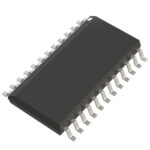 AD7228ABRZ

The activity of extra discounts on wholesale prices is in full swing…
Please fill in your contact information and we will send you the latest wholesale price list.






