 ChipApex | Global Electronic Components Supplier

SEARCH
Search Product
Search Post
— IC芯片 | 连接器 | 传感器 | 被动器件 —
Search productSearch post
— IC芯片 | 连接器 | 传感器 | 被动器件 —
Consult the customer manager about the wholesale price.
consultation hotline:86-132-6715-2157
email:[email protected]
Contact the product manager for consultation. One-stop consultation is available.
Do you want a lower wholesale price? Please send us your inquiry and we will reply immediately.
The AD7248AQ is a monolithic 12-bit CMOS digital-to-analog converter (DAC) featuring an integrated output amplifier and a buried Zener voltage reference. It utilizes an 8-bit parallel data bus with a double-buffered interface, requiring two write cycles to load the full 12-bit word. The device operates from single or dual supplies ranging from +10.8 V to +16.5 V for VDD and 0 V to -16.5 V for VSS. Key performance metrics include a typical settling time of 10 µs to within ±1/2 LSB, a relative accuracy of ±1/2 LSB at 25°C, and low power consumption of 65 mW in single-supply mode. The part is housed in a 20-lead Cerdip package.
Verify the specific suffix 'Q' corresponds to the Cerdip package option as defined in the Analog Devices ordering guide. Confirm that the required temperature range matches the commercial grade (-40°C to +85°C). Ensure system design accounts for the 20-lead pin count and 8-bit data bus interface requirements distinct from the 12-bit parallel AD7245A variant.
Select the AD7248AQ when interfacing with microprocessors utilizing an 8-bit wide data bus, as it accepts data in two separate write operations. Choose this model over the AD7245A if space savings from the 20-lead package are prioritized over the direct 12-bit parallel loading capability. Verify that the ±1/2 LSB accuracy grade meets the system's linearity requirements without external trimming.
The AD7248A is an enhanced version of the industry-standard AD7248, offering improved specifications such as faster interface times (30 ns typical data setup), extended temperature ranges, and better full-scale variation with supply voltage changes. It belongs to the DACPORT family, which integrates precision analog functions on a single CMOS chip to reduce component count and increase reliability compared to multichip designs.
The AD7245A is a functional alternative within the same datasheet but features a 12-bit parallel interface rather than an 8-bit bus. Substitution requires adapting the digital interface logic to accommodate the different data loading structures. Other ADI DACs may require significant circuit redesign due to differences in architecture, pinout, and supply requirements.
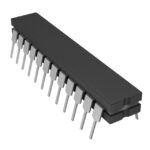 AD7248AQ

The activity of extra discounts on wholesale prices is in full swing…
Please fill in your contact information and we will send you the latest wholesale price list.







