 ChipApex | Global Electronic Components Supplier
SEARCH
Search Product
Search Post
— IC芯片 | 连接器 | 传感器 | 被动器件 —
Search productSearch post
— IC芯片 | 连接器 | 传感器 | 被动器件 —
Consult the customer manager about the wholesale price.
consultation hotline:86-132-6715-2157
email:[email protected]
Contact the product manager for consultation. One-stop consultation is available.
Do you want a lower wholesale price? Please send us your inquiry and we will reply immediately.
The AD737KN is a low power, precision, monolithic true RMS-to-DC converter manufactured by Analog Devices Inc. It computes the true RMS value of an input signal and provides a DC output proportional to that value. The device features high accuracy with a maximum error specification of ±0.2 mV plus 0.3% of reading for sine wave inputs. It supports direct interfacing with 3½ digit CMOS ADCs and offers a wide dynamic range with signal crest factors up to 5. The component operates on a wide power supply range from ±2.5 V to ±16.5 V and maintains a typical standby current of 25 µA.
Verify the specific suffix KN indicates the ceramic DIP package variant when sourcing. Confirm RoHS compliance status as manufacturing revisions may affect material declarations. Check for availability constraints or limited stock notices from distributors. Ensure the ordering part number matches the required package type and temperature grade. Validate datasheet revision against the specific batch production date.
Select this component when precise RMS conversion is required for complex waveforms beyond simple sine waves. Consider the negative-going output polarity which may require inversion if positive logic is needed. Evaluate the 25 µA standby current for battery-powered applications. Compare against the AD736 if a positive output polarity is strictly required without additional circuitry. Verify input scaling requirements for signals exceeding the 200 mV full-scale range.
The AD737 series represents a family of true RMS-to-DC converters designed for high accuracy and low cost. The AD737 specifically provides a negative-going output, whereas the AD736 offers a positive output. Both devices share similar internal architectures and performance characteristics, differing primarily in output polarity. This family is intended to replace traditional precision rectifier circuits in measurement systems.
The AD736 is the primary functional substitute within the same family, offering identical performance with a positive output polarity instead of negative. Other general-purpose RMS converters may be considered but will likely lack the specified accuracy or waveform handling capabilities.
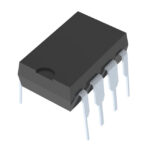 AD737KN
The activity of extra discounts on wholesale prices is in full swing…
Please fill in your contact information and we will send you the latest wholesale price list.





