 ChipApex | Global Electronic Components Supplier
SEARCH
Search Product
Search Post
— IC芯片 | 连接器 | 传感器 | 被动器件 —
Search productSearch post
— IC芯片 | 连接器 | 传感器 | 被动器件 —
Consult the customer manager about the wholesale price.
consultation hotline:86-132-6715-2157
email:[email protected]
Contact the product manager for consultation. One-stop consultation is available.
Do you want a lower wholesale price? Please send us your inquiry and we will reply immediately.
The AD737KRZ-RL is a low power, precision, monolithic true RMS-to-DC converter manufactured by Analog Devices Inc. It is laser trimmed to provide a maximum error of ±0.2 mV ± 0.3% of reading with sine wave inputs. The device computes the true RMS value and provides a negative-going output voltage proportional to the RMS value of the input signal. It features a wide power supply range from ±2.5 V to ±16.5 V and maintains high accuracy while measuring a wide range of input waveforms, including variable duty cycle pulses and triac-controlled sine waves.
Verify the specific suffix 'KRZ-RL' against the official Analog Devices datasheet to confirm temperature grade and reel packaging specifications. Ensure compatibility with system requirements for negative-going output signals. Confirm availability status as distribution channels may vary. Validate RoHS compliance documentation prior to integration into final products.
Select this component when precise RMS conversion of non-sinusoidal signals is required without external calibration. Consider the negative output polarity relative to system ground references. Evaluate the ±0.2 mV ± 0.3% accuracy specification against application tolerance levels. Assess the low standby current benefit for battery-powered designs compared to alternative precision rectifier circuits.
The AD737 series represents a family of true RMS-to-DC converters designed for cost-effective precision measurements. The AD737 specifically provides a negative output, distinguishing it from the positive-output AD736 variant. This monolithic solution eliminates the need for multiple discrete components typically required in traditional RMS conversion architectures, offering a compact and reliable alternative for signal processing applications.
The AD736 serves as a functional substitute if a positive-going output signal is preferred over the AD737's negative output. Both devices share identical internal architecture and accuracy specifications. Verify pinout compatibility and output polarity requirements before substituting.
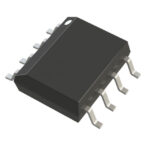 AD737KRZ-RL
The activity of extra discounts on wholesale prices is in full swing…
Please fill in your contact information and we will send you the latest wholesale price list.





