 ChipApex | Global Electronic Components Supplier
SEARCH
Search Product
Search Post
— IC芯片 | 连接器 | 传感器 | 被动器件 —
Search productSearch post
— IC芯片 | 连接器 | 传感器 | 被动器件 —
Consult the customer manager about the wholesale price.
consultation hotline:86-132-6715-2157
email:[email protected]
Contact the product manager for consultation. One-stop consultation is available.
Do you want a lower wholesale price? Please send us your inquiry and we will reply immediately.
The AD7740KRMZ is a low-cost, ultrasmall synchronous Voltage-to-Frequency Converter (VFC) manufactured by Analog Devices Inc. It operates from a single 3.0 V to 3.6 V or 4.75 V to 5.25 V supply, consuming typically 0.9 mA. The device features an internal 2.5 V bandgap reference and accepts analog inputs from 0 V to VREF, with true capability down to -150 mV without a charge pump. The full-scale output frequency is set by an external clock on the CLKIN pin, supporting frequencies up to 1 MHz. It is available in an 8-lead MSOP package.
Verify the specific grade suffix when ordering; the K variant denotes commercial temperature range while Y indicates automotive grade. Confirm package type matches design requirements as pinouts differ between SOT-23 and MSOP. Ensure supply voltage aligns with selected operating range. Check RoHS compliance status if required by assembly specifications. Validate clock source compatibility with CMOS logic levels.
Choose the K grade for commercial environments ranging from 0°C to +85°C. Select the Y grade for automotive applications requiring operation from -40°C to +105°C. Consider the buffered mode for high-impedance sources to minimize loading effects. Evaluate power consumption differences between buffered and unbuffered modes based on system battery constraints. Ensure the external clock frequency supports the desired resolution and conversion speed.
This component belongs to the AD7740 family of synchronous voltage-to-frequency converters. It utilizes charge-balance conversion technology to translate analog input voltages into a digital pulse train. The design emphasizes space savings and cost reduction compared to traditional ADC solutions. It integrates a precision reference and modulator within a compact footprint suitable for portable and industrial instrumentation.
Direct substitutes include other parts within the AD7740 series such as the AD7740YRTZ for different packaging options. Verify thermal performance and pinout compatibility before swapping packages. Cross-reference specifications for integral nonlinearity and offset error if higher precision is required. Ensure replacement parts support the same clock frequency range and supply voltage conditions.
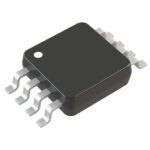 AD7740KRMZ
The activity of extra discounts on wholesale prices is in full swing…
Please fill in your contact information and we will send you the latest wholesale price list.





