 ChipApex | Global Electronic Components Supplier
SEARCH
Search Product
Search Post
— IC芯片 | 连接器 | 传感器 | 被动器件 —
Search productSearch post
— IC芯片 | 连接器 | 传感器 | 被动器件 —
Consult the customer manager about the wholesale price.
consultation hotline:86-132-6715-2157
email:[email protected]
Contact the product manager for consultation. One-stop consultation is available.
Do you want a lower wholesale price? Please send us your inquiry and we will reply immediately.
The AD7889-1ACBZ-RL7 is a 12-bit successive approximation analog-to-digital converter (SAR ADC) designed for resistive touch screen applications. It operates on a single 1.6 V to 3.6 V supply and supports an I²C interface, indicated by the '-1' suffix in the model number. The device features a throughput rate of 105 kSPS and includes a preprocessing block with median and averaging filters to reduce noise. Key specifications include a shutdown mode consuming less than 6 μA, auxiliary input/battery monitoring capabilities, and integrated temperature sensing. It is housed in a 12-ball WLCSP package.
Verify that the specific ordering suffix matches the required interface configuration. The '-1' designation confirms I²C compatibility, whereas non-suffixed or other variants may utilize SPI. Confirm the package type corresponds to the design requirements, as the AD7889 family includes both WLCSP and LFCSP options. Ensure the ambient operating temperature range aligns with the specified -40°C to +85°C limits for reliable performance.
Select this component when an I²C interface is preferred over SPI for system integration. The AD7889-1 variant is suitable for low-voltage systems requiring operation between 1.6 V and 3.6 V. Consider the integrated filtering capabilities if the application environment has significant LCD noise. Verify that the 12-ball WLCSP package fits within the available PCB area constraints.
The AD7889-1ACBZ-RL7 belongs to the AD7879/AD7889 family of touch screen controllers manufactured by Analog Devices. This family provides complete data acquisition solutions for digitizing positional inputs from 4-wire resistive touch screens. The AD7889 specifically offers a backside-coated WLCSP option for enhanced reliability compared to standard versions.
The AD7879-1ACPZ-RL7 serves as a functional equivalent within the same family but utilizes an SPI interface instead of I²C. Direct substitution requires verifying that the host controller supports the SPI protocol or that the pinout differences for CS/DIN/DOUT versus ADD0/ADD1/SDA are accommodated.
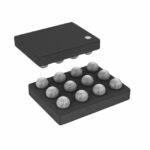 AD7889-1ACBZ-RL7
The activity of extra discounts on wholesale prices is in full swing…
Please fill in your contact information and we will send you the latest wholesale price list.







