 ChipApex | Global Electronic Components Supplier
AD7986BCPZ-RL7
Search Product
Search Post
— IC芯片 | 连接器 | 传感器 | 被动器件 —
Search productSearch post
— IC芯片 | 连接器 | 传感器 | 被动器件 —
Consult the customer manager about the wholesale price.
consultation hotline:86-132-6715-2157
email:[email protected]
Contact the product manager for consultation. One-stop consultation is available.
Do you want a lower wholesale price? Please send us your inquiry and we will reply immediately.
The AD7986BCPZ-RL7 is an 18-bit, 2 MSPS PulSAR analog-to-digital converter in a 20-lead LFCSP package. It features a true differential analog input range of ±VREF or 0 V to VREF with VREF up to 5.0 V. The device includes a 4.096 V internal reference with a typical drift of 10 ppm/°C and operates on AVDD/DVDD at 2.5 V and BVDD at 5.0 V. Power dissipation is 15 mW at 2 MSPS with an external reference and 29 mW with the internal reference. Key accuracy metrics include an INL of ±2.5 LSB maximum and an SNR of 97.0 dB with an external reference.
Verify the specific ordering suffix RL7 indicates reel packaging when sourcing components. Confirm that the LFCSP-20 package matches the target PCB footprint and thermal requirements. Ensure the voltage levels for AVDD, DVDD, and VIO align with the system design specifications before integration.
Select this component for applications requiring high resolution and moderate speed. Consider the internal reference if board space is limited, noting the higher power consumption compared to using an external reference. Evaluate the need for turbo versus normal mode based on power constraints and throughput requirements.
This part belongs to the AD7986 series of 18-bit PulSAR ADCs from Analog Devices. It shares architectural similarities with the AD7985 (16-bit) and AD7944 (14-bit). The family utilizes a successive approximation register architecture optimized for low power and high accuracy in compact packages.
The AD7985 is a pin-compatible 16-bit alternative within the same family. Verify functional requirements against the AD7985 datasheet to ensure resolution differences do not impact system performance.
Turbo mode (TURBO = high) allows a maximum throughput of 2 MSPS without powering down between conversions. Normal mode (TURBO = low) reduces power consumption by powering down between conversions, resulting in a maximum throughput of 1.5 MSPS.
The internal reference is enabled when the PDREF pin is low. When PDREF is high, the internal reference is powered down, allowing an external reference voltage up to 5.0 V to be applied to the REF pin.
The AD7986 features a versatile serial interface port compatible with SPI, QSPI, MICROWIRE, and DSP standards. It supports 1.8 V, 2.5 V, and 2.7 V logic levels via the VIO supply.
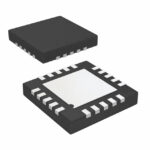 AD7986BCPZ-RL7
The activity of extra discounts on wholesale prices is in full swing…
Please fill in your contact information and we will send you the latest wholesale price list.