 ChipApex | Global Electronic Components Supplier
SEARCH
Search Product
Search Post
— IC芯片 | 连接器 | 传感器 | 被动器件 —
Search productSearch post
— IC芯片 | 连接器 | 传感器 | 被动器件 —
Consult the customer manager about the wholesale price.
consultation hotline:86-132-6715-2157
email:[email protected]
Contact the product manager for consultation. One-stop consultation is available.
Do you want a lower wholesale price? Please send us your inquiry and we will reply immediately.
The AD800-52BR is a Phase-Locked Loop (PLL) Clock and Data Recovery integrated circuit manufactured by Analog Devices Inc. Designed for telecommunications applications, it supports the STS-1 standard data rate of 51.84 Mbps. The device accepts Non-Return to Zero (NRZ) differential ECL data inputs without requiring a preamble or external Voltage-Controlled Crystal Oscillator (VCXO). It provides differential recovered clock and retimed data outputs, also in ECL format. The component operates on a single supply voltage ranging from -4.5 V to -5.5 V and functions within an industrial temperature range of -40°C to +85°C. It is housed in a 20-pin Plastic SOIC package.
Verify component authenticity through authorized Analog Devices distributors or direct manufacturer channels. Confirm lot traceability and RoHS compliance status prior to procurement. Check current availability as supply may be limited. Ensure storage conditions adhere to moisture sensitivity levels specified in the datasheet to prevent package damage during soldering.
Select this model specifically for 51.84 Mbps STS-1 applications. For DS-3 rates, use the AD800-45 variant. For higher speeds like STM-1, consider the AD802 series. Ensure the design accommodates the required loop damping capacitor value to achieve the desired acquisition time and jitter transfer characteristics. Verify that the system power supply can provide the necessary current within the specified voltage range.
This part belongs to the AD800/AD802 family of clock recovery ICs. The 'B' suffix indicates the -40°C to +85°C operating temperature grade. The 'R' suffix denotes the 20-pin Plastic SOIC package option. Other variants include the ceramic DIP package and different frequency targets such as 44.736 Mbps or 155.52 Mbps.
Direct functional substitutes within the same family include the AD800-45BR for DS-3 rates. For higher bandwidth requirements, the AD802-155BR supports 155.52 Mbps. Package variations like the ceramic Cerdip (Q-20) are available but require pinout verification.
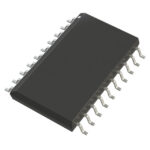 AD800-52BR
The activity of extra discounts on wholesale prices is in full swing…
Please fill in your contact information and we will send you the latest wholesale price list.





